Today marks the launch of the latest release by Chasing Driftwood’s Chantelle Atkins.
The release of The Mess of Us comes almost ten years after the year of its gipping predecessor, The Mess of Me in 2016 and we couldn’t be more excited. If, like us, you were captivated by Lou and Joe’s journey in the first book, prepare yourself for another powerful instalment of their story.
Atkins has a unique talent for crafting complex, deeply human characters, and The Mess of Us is no exception. The story dives into the messy realities of love, trauma, forgiveness, and self-acceptance–the one responsible for Joe’s coma–being released from prison, their fragile world is thrown into turmoil once more.
Will they find it in their hearts to forgive?
Can people really change for the better?
And with an unplanned pregnancy and Lou’s past struggles threatening to resurface, will their love survive the coming storm?
As always, Atkins doesn’t shy away from life’s hardest questions, and The Mess of Us is a novel that will resonate with anyone who’s struggled with trust, self-worth, and second chances. It’s an emotional rollercoaster that pulls no punches but offers hope in the most unlikely of places.
If you loved 2016’s The Mess of Me, you definitely won’t want to miss this powerful sequel. The Mes of Us is available now–get ready for one unforgettable, beautifully messy summer with Lou and Joe. It’s sure to be one you’ll never, ever forget.
Have you read The Mess of Me? What are you most looking forward to in The Mess of Us? Let us know!
Writer’s block is something most writers experience at some time or another and it is something that writers tend to dread. I’m not a fan of the phrase ‘writer’s block’ because there is something about it that sounds so hard and final, like a literal brick wall. I prefer to think of it as simply being ‘stuck’. And writers get stuck all the time and for many different and complex reasons. Here are just a handful of ways writers can get stuck along with tips to get unstuck again!
1.Plot Stuck #1- one of the most common and one of the hardest to get through. There are a number of ways you can get stuck when it comes to your overall plot and we will discuss two of them here. The first is the most frustrating and it happens to me a lot. You know exactly what you want to happen in your plot because you have planned it all out, created your character bios and maybe even written all your chapter outlines. You know what is going to happen, so it should be simple, right? Nope. The most frustrating thing about writing a story or a novel can be knowing what you want to happen but not knowing how to do it. I think one of the reasons we feel like this sometimes is a lack of confidence in our writing. We have a good idea, a solid plot but think maybe someone else could write it better. That’s not usually the case. You just have to accept it’s going to be hard work and a long slog to get it right. Eventually, you will bring in beta readers and editors to help point out where things could be improved and believe me, as further drafts are written and rewritten, you will eventually figure out the best way forward. Writing is largely rewriting after all!
The Solution – sadly there is no easy fix for this problem. It may involve lots of long walks and time spent thinking about your plot and how to move things forward. Sometimes the answers come when you least expect it. It may mean you have to go back to your chapter outlines and remind yourself of the plot, perhaps inspiring a way forward. Sometimes you just have to write it anyway. Put the characters where they need to be, write the dialogue, advance the story and worry about fixing it later. When you know what to do but not how to do it, the important thing is to just push through and get it done. It will probably be ugly and clumsy and you may very well figure out a better way to do it later on but don’t let that stop you.
2. Plot Stuck #2 – This is when you simply don’t know what to do next. This mostly happens to writers who don’t plan or outline their stories before they start. There is nothing wrong with that approach at all. It can be really fun and invigorating to just start writing and see where the story and the characters take you. But it does increase the risk of getting stuck eventually. You run out of steam. The plot trails away or misbehaves. You don’t know what these characters are doing. You’ve run out of ideas. It can be really scary to feel this way and many writers will give up at this point and start something else, but there is a way to solve it!
The Solution – Sometimes the only way to solve this one is to embrace planning and plotting. Go back to the start and remind yourself why you wanted to write this story, what the driving idea or concept was. Remind yourself of any important themes you wanted to explore. Take a look at your characters. Are they developed enough? Maybe they need more work to bring them to life, which again means giving in and embracing some planning. If this fails, there are other things you can try. I am a strong believer that taking long walks in nature dislodges ideas in our brains. Any time I have every been stuck with a book or a story, I have usually found the solution during a walk with my dogs. Some people find taking a long bath or shower can help or maybe another immersive task such as gardening or cleaning. Get away from the screen or the notebook and do something else for a while. Another thing worth trying is asking other people. Ask your friends and family or even people online what they think about your plot so far. This has also worked well for me in the past. I’ve often used a family member for a sounding board of everything that is annoying me with my work in progress. Often they will mention a few things or suggest something that actually really makes sense. Don’t be scared to ask for help or find inspiration around you.
3.The elusive ‘right’ words – another really common one and one I can sympathise with. Sometimes you’ve got everything else in place – the characters are fully formed, the plot is advancing well and you know what to do but then words and phrases start to elude you. When writing a first draft we want to get it right, it’s only human nature to want to try our best and achieve something good first time around. The words hide from us and its like we are looking for those perfect, right words to make our sentence really fly off the page, and they just won’t come. I hate it when this happens as it can really disrupt a good flow of writing. It’s a case of partly knowing what to say but not how to say it and partly being a bit of a perfectionist who wants to get it right first time.
The Solution – You can try some practical things like asking for help, consulting a thesaurus or dictionary or bringing in a beta reader or fellow writer to help you find the ‘right’ words. Or you can do what I do…use the words you have and move on. At some point you will come back to this passage and rewrite it. As we have already established, writing is mostly rewriting! Sometimes we just have to write the best sentence we can at that moment, shrug it off as imperfect but at least done, and move on. Remind yourself that you will come back later to fix it and more than likely the right words will be there as if by magic!
4.Not Enjoying It Stuck – Sometimes we get stuck because something is wrong. It may be a mix of all the things mentioned above or it may be something bigger. As writers, when we have already committed many hours to a story we are sometimes reluctant to admit it is just not working. I recently experienced this. I was writing a book, dedicating myself to a chapter every night, but it felt very forced. I was forcing myself to do it and that didn’t feel right to me, because writing should be fun! It took me a while but I finally figured out what the problem was, and yes it is going to involve a heck of a lot of rewriting but I am not stuck anymore! I had to admit what was wrong and set about fixing it. If you are not enjoying your writing, you will continue to get stuck or blocked so you need to work out what the problem is.
The Solution – Don’t give up. Don’t bin it just yet! You might need a break from it, in which case put it somewhere safe and come back to it another time. Write something else. Write a short story or a blog post or a poem. Give your frazzled mind a break from what has been frustrating it. This can work because if the idea is strong enough it will eventually push back through. But also, you need to figure out and admit what is wrong with it. Very often it lies with the characters. Perhaps they are not strong enough, not believable enough or developed enough. Go back to scratch with them and put more work into developing them into real people with flaws, quirks, wants, needs, mannerisms and back stories. Sometimes it might be the point of view. Try switching from third to first person or vice versa. Sometimes it might be the tense. Try it in present tense if it’s in past, and so on. Sometimes it is the audience – did you set out to write a thriller or a mystery or a romance? If you did, the chances are all the other books in that genre are sitting on your shoulder watching and adding pressure, along with the perceived tropes and expected elements of that genre. It is useful to know your audience before you write, but it can also sully the writing and make it feel like you are writing to order. Write for yourself first and foremost. Write the book you would like to read. This will bring the enjoyment back and you can figure out the rest later!
Over to you! Have you ever experienced writer’s block and if so, what was it like for you? In what ways do you tend to get stuck with your writing and have you figured out a way to get unstuck?
We hope you have enjoyed our post about writer’s block or being ‘stuck’ and have found the tips useful. If you have anything to share or add, please feel free to leave a comment!
Back in August 2024 I had a silent release for my latest novel, Welcome to Hollow Wood. This book has been 12 years in the making and I honestly can’t quite believe that it’s finally out.
Growing up I was always hooked on movies I was probably far too sheltered to be watching at the time — like SCREAM, I Know What You Did Last Summer, and a variety of other teen thrillers and suspense films. During my school years you would always find me in the library devouring anything and everything by R. L. Stine, too. I think that’s where my inspiration for not only this story but most of my writing stems … Good characters and irresistible twists, red-herrings, and reveals.
Cover art for the novel, created via Canva
This story first begun somewhere around 2012 when one of my university assignments for Creative Writing was to create the first six chapters of a novel. Whilst most of my classmates wrote deep, poetic romances and historical fiction, I was writing about teens and murder. At the time I couldn’t understand why they weren’t … It was so much fun!
Unfortunately, disaster struck when my laptop died and my hard drive failed to restore the file. I was devastated. All that hard work vanished, never to be retrieved. I thought about re-writing it all, but the idea of starting over and not capturing what I had upset me. I decided to put it to bed. However, over the years the characters wouldn’t stop running through my mind and in November 2021 I decided to add Hollow Wood to my list of work to complete by the end of 2024.
In some ways this story does connect to others in the Sim Alec Sansford Universe (I really need to come up with a better name for it than that!). Hollow Wood is first mentioned in my debut novel, Welcome to Denver Falls, where it is the neighbouring town. In that book the there is a baseball scene where the Denver Dholes go up against the Hollow Wood Hawks.
Book two, which I’m working on currently, also makes reference to a character featured in my series Fortune’s Well. However, despite links to these series Hollow Wood is not paranormal.
The book is currently being made into an audio version, narrated by the talented Amy McGhee. The process has been so much fun and it has been fantastic hearing Amy bring the characters to life. I was recently asked why, as a British author, I selected an American narrator for my book. The truth is I wanted to capture the essence of those 90s and 00s teen thrillers I admired so much growing up. There’s something about the American influence that brings back that sense of nostalgia for me.
The audiobook should be available by March 2025, and I cannot wait for you to hear it!
Everyone apart from Weaver Lawrence, Eliot Chase, Noah Castello and Beth Sinclair, the only ones that know the truth. At least that’s what they think.
Little do they know someone else was there that night in the woods two years ago, and they’re thirsty for revenge.
On the surface, their town of Hollow Wood seems like the perfect vacation destination. Quaint countryside, large estates, wealthy residents with perfect lives and perfect smiles.
But with senior year coming to an end and exams looming;for these four estranged friends, this year’s going to be an absolute KILLER…
READ ON FOR A SNEAK PEEK!
The plan was simple. The friends were to meet up at the quad for the first time in what felt like forever. Despite being the unofficial ringleader, Weaver couldn’t help but feel nervous at the prospect of having the old posse back together. Not only was there the obvious, immediate threat, but also things between them hadn’t exactly ended on great terms.
Beth and Eliot practically hated each other; Noah was too fucking stubborn to give into his feelings; and as for Weaver, he’d thrown himself into sports to distract himself from the truth. His life was changing, falling apart around him, and he’d sooner stick his head in the sand than face the reality of it all.
He paced anxiously across the grass, ignoring the signage that threatened suspension to any students caught damaging the flowerbeds. He couldn’t care less, not right now. Besides, it was after hours and there was nobody there to report him.
Moments later he saw a set of headlights pulling into the parking lot. It was Noah. He hopped down from the drivers seat and pulled a set of crutches from the back. Weaver felt a pang of guilt. He’d completely forgotten to consider when he’d made the call if Noah would be up to it. After all, what he was about to propose was no easy expedition.
“This better be good.” Noah said as he reached him. “These bad boys will keep me going for now but if you’re going to keep us here all night I’ll grab the chair.” He gave Weaver a wink, letting him know he really didn’t mind. Today was a good day for Noah Castello, but his mobility was so sporadic you never could tell when he’d take a turn for the worst.
Weaver didn’t get a chance to reply, before he even opened his mouth to speak two figures emerged from the other side of the quadrangle. One tall, and dressed in a crisp, clean sweater. The other, short and brooding.
“What did we miss?” Eliot asked as they approached. Weaver couldn’t help but notice the two girls were linking arms. A cursory glance at Noah proved that he’d noticed the unusual affection between the two as well. Whatever Eliot had told Beth about what was going on must have really sunk in.
“Nothing, Noah just got here too.” Weaver informed them, then gestured toward a bench by the fountain. They all took their places exactly as they would have back in the day. Girls on one side, boys on the other. It was exactly how Kelsea had instructed. Back then Beth suspected it was her way of keeping everybody in check. Plus Kelsea absolutely loved having Eliot sit opposite Noah so she could watch her squirm as she flirted with him, and reached over and played with his hair.
“So, you all know why we’re here,” Weaver begun.
“Threats. Stalker. Yeah, sure,” Noah added. “But what exactly are we going to do about it?”
Eliot and Beth looked up in anticipation. Weaver felt his brow begin to sweat, he wasn’t sure if what he was about to say was a good idea or not. But he knew doing something was better than doing nothing at all.
“We go back to the hiking trails.” He announced.
“What the fuck?” Eliot’s head practically exploded off her tiny body. “Why would we do that?”
“Well,” Weaver cleared his throat. “I was thinking, whoever is doing this must have been there that night. Maybe we’ll find something.”
“After two years?” Beth practically laughed in his face. “Seriously?”
“Well.” Weaver shrugged.
“Might not be such a bad idea.” Noah chimed in. He was staring down at his phone with his brow furrowed. He turned the screen to face them. “Looks like I finally got my first stalker gram.”
Sure enough there it was, a photo of a long, rusted metal pipe. A photo that would mean nothing to anyone else, but the Hollow Wood four knew exactly what it was. And exactly what it meant. Beside Beth, Eliot stiffened. It even seemed for a moment that all of the colour drained from her perfect face.
“So, what does this mean?” Beth asked on behalf of everyone.
“It means that whoever is doing this has been up there recently.” Weaver explained. “Even more reason for us to go.”
“I don’t think I can.” Eliot said. Her eyes flicked across at Noah who was looking back at her slightly offended. After all, if he could bear to go back there, surely she should too. Surely they all should.
“We have to.” Beth said, and Weaver couldn’t help but be a little surprised at how easily she’d agreed.
“So it’s decided then?” Noah asked. Then after a moment of silence he lifted his hand out into the centre. Slowly but surely the others placed theirs on top, Eliot being the most reluctant. “Road trip,” Noah cheered, as the group made their way across the lot to Beth’s car…
A question we often get asked at writing clubs or workshops is how do you write a book? Often someone will have a good idea for a story, and possibly some characters developing but are unsure where to go from there. It’s an intriguing question and one I personally love to talk about so we figured it would make an interesting blog post. It’s different for everyone and if you research how to write a novel you will find a mountain of advice, tips and strategies to use online. Not every approach will work for you. Part of the fun of writing is working out what suits you and your idea. So this is mine. This is how I write a book.
Start with an idea – This is the most important ingredient. You need a solid idea OR a character. For some people the plot comes first and then they have to create and develop characters to go with it, and for others, it’s the characters they think up first. Either is fine and you might find it works differently each time. For me personally it is usually the characters that come first. They will start to develop in my mind and as their personality comes alive, they will start to suggest their back story and their main story and the plot will start to grow from that. Sometimes it works the other way around and I will get an idea for a story first and then have to devise the characters to fit it.
Let it grow – To start with, I let the idea percolate in my mind for a bit. I write down anything I don’t want to forget, but most of it stays in my head. It will swirl around in there for a while, popping up when I least expect it, developing and swelling and growing tendrils! I think it’s important to let this process take its course. I don’t want to force anything. Usually I will already be working on another project so there is no hurry to jump to this new idea. I leave it be and let it grow naturally.
Get a notebook – Now, when the real ideas start to flow, and by this I mean characters, personalities, back stories and possible plots and storylines, it becomes too much to contain in my head. I must start writing things down or something will get lost. I might start off tapping a few thoughts into my phone but eventually I get a new notebook and dedicate it solely to this idea. I start off writing down any notes I already have and everything else that has been growing in my head. Character bios, dialogue, action scenes, possible titles, character arcs, possible endings and so on. It won’t be a full plot yet and the characters will not be fully alive either, but I am paying attention to this idea now. It has its very own notebook.
Work on characters – For me, the characters are always the most important aspect of books I read and books I write. It’s different for everyone, but I want to love the characters, feel fully engaged by them, root for them and care for them. I can’t enjoy a book if I don’t care about the characters and equally I can’t write a book if I am not fully in love with these people I am creating. So, I will start to write detailed character bios into the notebook. They might start with the basics: name, age, physical appearance, occupation, home, family etc and then they will get more complex. What do they want? Who do they love? Have they been hurt? What are their regrets? What are their flaws? I want to get under their skin and know them inside out. This will be a long process and I won’t fully know them until maybe draft three, but I want to put the work in now.
Write a basic plot outline – This will start as a kind of mind-map of possible ideas. Ideas tend to spark of other ideas or questions, so I will note this all down. It all goes in the notebook. It’ll be messy and chaotic but it is all safely in one place. I’ll also bullet point what I consider to be the main storyline and jot down any ideas for sub-plots and character development. Most of my books are quite character driven so developing the characters alongside the plot is important to me.
Write basic chapter outlines – I won’t usually know everything that is going to happen but I will outline as many chapters as I can in the notebook so that I have a starting point and something to refer back to. Inevitably, extra, unexpected chapters and scenes will work their way in between what I initially lay out and once I get past a certain point I will probably then know the next few chapters. I then work a few chapters ahead, so I will usually always know what I want to happen in the next few chapters at least.
Start writing! – The fun bit. Also the scary bit! But by now I will be desperate to get going. If I have been working on another book, this idea may have had to wait for a while so by the time I get to it, I am very keen and excited to get started. I won’t know exactly where I am going and I don’t plan or plot every detail. I like to see what happens to a certain extent.
Write a chapter a night – Obviously, life gets in the way sometimes and sometimes the writing just doesn’t flow but my goal is always a chapter a night. That’s roughly 2-3 pages of a Word document. I treat it like work, like a commitment and push through the tough bits and the bits that don’t flow too well and I just keep going. I don’t mind how messy or awkward the first draft is, I just aim to get the gist of it, the basics of it done. This usually takes three months.
Second draft – I read it through, reminding myself of what I have done. I amend glaring typos but I don’t really edit much on a second draft, it’s more of a read through to see what I have got.
Third draft – a more serious read through and edit. I add bits, delete bits, amend typos and errors. I will know the characters better by now so might add bits to them, their speech, their back story and so on.
Fourth draft – I keep a list as I read through and edit and make notes of bigger things to fix like plot holes or inconsistencies in character or storyline. Whenever I go over another draft I check off these things on the list until there is nothing left.
Fifth draft Kindle read – by now I feel like I can’t do much more, so I send it to my Kindle and read it on there. It’s amazing how many typos and errors are picked up when you read your book on an ereader! You feel a bit less connected to it and can tackle it in a different way. I keep the notebook handy as I read and write down notes for each chapter in turn, typos, grammatical errors, plot holes, questions, anything.
Sixth draft – back to the laptop to amend the edits picked up on the kindle read
Beta readers – I am very lucky that I have some fantastic people available to read my work at this stage and tell me what they think. I might want specific feedback ie is it fast paced enough, is this character interesting enough etc, or I might just hand it over and say very little.
Seventh draft – editing based on beta reader feedback
Send to editor/proofreader
Eight draft/final – amend anything they picked up and that’s it. Done!
The amount of drafts will very much depend on the type of story, the length of the book and the feedback from beta readers. Sometimes my first draft attempt will evolve into something very, very different and sometimes it basically stays the same!
Feel free to add your thoughts on how to write a book. Everyone has a different process and there is no correct way to do it.
But, I hear you protest, isn’t that a solitary pursuit? An activity for introverts and loners? Won’t that just make it worse?
No, and I’ll tell you why.
I remember standing outside school when I was about four or five, trying to understand why I was only me. Why my thoughts and feelings were limited to just mine. I looked at my friends and my mother, and stared into their eyes and realised I could not climb into their heads and become them, I could not occupy the space behind their eyes and see the world as they did. I vividly remember thinking how amazing, strange and sad this was.
But I soon found out that this does not really apply to writers. If you are a writer, you are not limited to being just one person or living just one life. As a writer, I discovered that I was never just me, and I was also, never, ever alone.
When I started to write stories, they were about animals, lost and neglected, looking for love and embarkiing on adventures. I became them. I was them just as much as I was Chantelle. I had to quieten them and hide them when people asked something from me. I had to climb back out of their minds and fully inhabit mine. But I would try to get away with not doing this in full. I’d be eating my dinner, sniffing the air, sure I had picked up the scent of trouble, my eyes darting from side to side, planning an escape. I wasn’t just me. And then when dinner was over, the stories would continue and I would slip back into character.
Throughout my life, I have been all the people I have written about. I have not simply created them, written their stories and then cast them aside. It doesn’t work like that at all. These people come to me, somehow, for some reason. They start off small and grow bigger and bigger, louder, more complex, more real. They are all from me. It blows my mind. It’s like they find me and ask me to tell their story, but that’s not really it. Somehow, they come out of me, because they are me.
And then I am them. I become them in order to write their story, in order to feel what they feel, and do what they do. I think about them so much, picture them, hear them, study them. I lie awake at night, and they are there. Characters from books already written, and characters still developing in my head for future books.
When I least expect it, they pop up and start talking or arguing. They are helping me to write the book. I learn new things about them every day. I will be washing up or making dinner, and suddenly there they are. Because of these people, I am never, ever lonely. I don’t know what it feels like to be bored or alone. Because of them, I don’t know how to have just one train of thought in my head. I don’t know how to have a quiet mind.
Yet, to those that know me, I am often described as quiet.
Sometimes I think the people in my head are the best thing about being a writer. Creating worlds and weaving plots, sharing your work with readers, getting reviews, these are all fantastic, magical things, but being more than one person who is never, ever alone, has to be the best and maybe the most unexpected.
My advice to anyone feeling lonely is to write.
Don’t overthink it. Don’t write for anyone else. Don’t write to get rich or famous. Don’t let anyone stop you. Ignore the naysayers and their frowns of doubt. Write whatever you want. Bend the rules. Break the rules. Make up your own goddamn rules. Write for fun, for frivolity, for yourself, write as if no one is looking over your shoulder. Let it out, whatever it is. Release. Feel better.
How can you ever be lonely again? You can weave words and create worlds. You can listen to the voices in your head then allow them to live, to be alive just like you! You can create whoever and whatever you like.
You will never be lonely now. You have a head full of ideas. Everywhere you go new ones will pop up. Everything you see, hear, smell, taste and touch will become writing material. Conversations, eavesdropping, people-watching — these are your new hobbies! Everywhere you go there is possible content. Stories are everywhere. Everything is a story.
But that is not all. You’re feeling less lonely now but it can go further. To finally cure your loneliness for good, you have to share your words with the world. Release the stories and the poems, the thoughts and the dreams, the hopes and fears, the people you created, the worlds you invented. Share them, spread them, set them free and you will never be lonely again.
And it doesn’t even end there.
There is no need for loneliness as a writer. You can collaborate with others. Share ideas. Throw them around. Join writing groups. Read and support other writers. Share in their journey, give and take, feedback and congratulate, support and take pride in their success too.
You are not alone. You never were.
Written by Chantelle Atkins and previously published on Medium. Chantelle’s latest release, The Mess Of Us can be preordered on Amazon now!
A few weeks ago I was getting ready to run another one of my Creative Writing Workshops for teens and young adults. I was, understandably, nervous. I always am before a workshop no matter how many times I run one… It doesn’t matter that I spend all day working with children in my full time job as a Learning Support Assistant…. Nor does it matter that I am an uncle to four beautiful nieces and a nephew, and big brother to five siblings… Or all the time passed or experience I have gained— the nerves always win (not that I ever show it).
The thing with Creative Writing workshops, is you never know what to expect. Of course, it is always great to go in with a plan, a structured outline of what the session will cover, and what participants can hope to achieve in the allotted time. However, things don’t always go to plan. You never really know who is going to show up, and what their relationship with writing is.Some come in fresh and new, which is fantastic, it means that new writers are emerging which is always a delight to see. Some come with a background in writing already, perhaps they’re already published or are working on a project they just need help pushing through to the finish line. But no matter who they are, they always come with questions, or their own personal goal they want to achieve from the session. As a result my workshops do sometimes shift away from the plan slightly. This is exciting, and all the attendees always have great things to say after, but it also adds to the nerves… Never knowing what to expect.
When I was preparing for the workshop, I was excited. I had a great plan at the ready, plenty of resources, I even had some of my own books and books by other authors I credit to show off. I always bring a variety of different work along to show that Creativity can mean anything you want it to. My favourite book to bring is House of Leaves by Mark Z Danielewski. I bring this with me because if anything is going to show how “out there” Writing can be, it’s that book. Text upside down. Pages you can only read in the mirror. Multiple font sizes, styles, and colours. Text splayed out diagonally, in corners, in columns. Some pages have barely any text on them at all, where others are crammed full. Students always love flicking through and realising how exciting Creative Writing can be.
The night before the workshop, I was nervous as usual. But I hadn’t run a workshop in a while so the excitement of getting “back on the horse” overuled this. The next morning I travelled 3 hours to attend. I wouldn’t normally go this far for a workshop, but it was part of a festival that is very dear to my heart, so the distance didn’t bother me.
When I arrived I met up with some fantastic authors I hadn’t seen for a long time. Too long in fact. It was so great catching up with them and finding out what they were up to. I would have loved to have stayed longer, but it was on to the library to get set up. By this point the nerves were surfacing again as they usually do, but I knew what to expect and I had everything ready. All that was left to do was wait for people to arrive.
Only I waited.
And I waited.
And I waited.
And for the first time in four years. Not a single person showed up. Not one.
Let me be clear, I don’t blame the festival for this. Nor do I blame myself. Unfortunately, I just believe it was one of those things. I know what you’re thinking — why didn’t I confirm numbers before setting out on such a long trip? Normally, I would have. Although, on this occasion there were no sign ups as the festival had previously done this at other events I’d run, but most of the young people attending would be walk-ins. Not to mention this festival was close to my heart, so I was happy to attend regardless to show my support.Part of me felt a sense of relief. After such a long, stressful drive, it was nice not to have to stand for an hour and work. But another part of me was absolutely gutted. How could not one person show up? Especially when I’d run other workshops in the town and knew for a fact there were many young people interested. Some had even reached out to me via email to ask for advice, or when I would be back.
Turning a negative into a positive, I decided to spend the time working on some writing. Before heading over to support another author by attending her writing workshop for adults across the road. It was a great experience and I’m glad things worked out for her, with such a fantastic turnout.You may think something like this would absolutely knock my confidence. Especially considering how I am in the process of setting up workshops more regularly again in the New Year.However, reflecting on this I realised something. For the longest time my biggest fear about my workshops was the question “what if nobody turns up?”
Now that I’ve experienced it. Now that I’ve seen that the world didn’t end. I no longer need to ask myself “what if?” because now I know how to handle it, and exactly what to expect.I know this experience is in no way a reflection of me or my ability as a writer and a tutor. I know that it is, in fact, just one of those things.So, what do I do going forward? Short answer — simply keep going. Of course, the wise thing to do would be to confirm a rough idea of numbers beforehand, and believe me, I will. However, the important thing to take from all of this is sometimes things will happen that you simply cannot predict.
All you can do is brush yourself off, be thankful for the opportunity and experience, and just keep pressing forward.And that is exactly what I am going to do.
I worked for many years using creative writing as a therapeutic tool to enable survivors of all manner of traumatic experiences to heal from their memories and to find a creative way to express the traumas they had been through and had survived.
Forget those well-known tales for children, whether the moralistic literary fairytales by the likes of the Brothers Grimm, or the saccharine Disney cartoons. I’m talking about the dark violent oral tales that stretch back into prehistory and can be found all over the world in mythology and in folktales. These are the stories that reflect our darkest experiences and the traumas so many people have been through and still go through today.
When you have lived through severe trauma it’s likely that you will find you have no language to give a direct and coherent account of your experiences, and that to write about it is too painful and disturbing. This is where myths and fairy tales, or dream imagery, or visual clues such as photographs or postcards (all of which I have used in my work) or any indirect way into writing, can help by making the whole process safer and easier to control.
Ancient myths and tales can help us to explore our past experiences, and as I began by saying, forget the modern saccharine fairytales. The original oral tales I’m talking about were told to help people (adults as well as children) cope with the dangerous world around them; both the natural world of dark forests holding wolves, bears, wild boar and other wild animals, and also the dangerous humans from other tribes or villages etc. that threatened to attack, enslave or murder them. These stories were about survival so the protagonists had to find their own means of resisting danger rather than relying on others, e.g. Red Riding Hood, in tales found across the globe, outwits the wolf or other beast (a bear in China) by using her own intelligence and ingenuity.
Besides the potency of these tales, the magical transformative aspect of fairytales can provide us with a means of exploring past traumas while taking back control over them through the creative use of language and imagery, to create something in words that is powerful – even beautiful – out of painful and traumatic memories. It’s a cathartic and healing process, allowing survivors who have been silenced in the past the chance of reclaiming their own experiences as told in their own words.
Whatever you have been through, it is likely you will find a myth, a folk or fairytale that reflects your experiences: e.g. if you were sexually abused, think of Philomel who was raped by her brother-in-law, then had her tongue cut out to silence her; or if you’re an incest survivor, read about Donkeyskin who had to run away from her home and live in disguise because her father wanted to marry her. Asylum seekers or refugees, like fairy wives, mermaids or selchies, find themselves trapped in an alien, often hostile society that does not understand their language and regards their cultural norms and values as strange and wrong; children who are outsiders for any reason in society – these days we call such children neurodivergent but throughout history they’ve been given various labels, in the old folktales they were called changelings and seen as goblins or other beings lacking immortal souls, left in the cradle by their supernatural kin as secret replacements for real children smuggled away to fairyland. Then there are other children who feel they are outsiders in their own families, or children who feel rejected by their parents, like Cinderella, or Hansel and Gretel.
The value of beginning your story with a fairytale or a myth is that you can identify yourself with that tale and begin by writing about your own life, but indirectly through the structure and plot of the chosen tale so that if it gets too painful, you can concentrate upon the folktale and take it somewhere else through your imagination until you feel safe enough to return to your own experiences.
Personally, I’ve always been especially drawn to tales of changelings and I have written several stories using a central character who feels alienated by the world around them, whether in a modern-day novel or in a fantastic fairytale setting. This December you will find a short tale, ‘The Changeling’, first published by Pyramid Press in an anthology, To Her Naked Eye, that you can read for free on my website: https://miriamhastings.com/
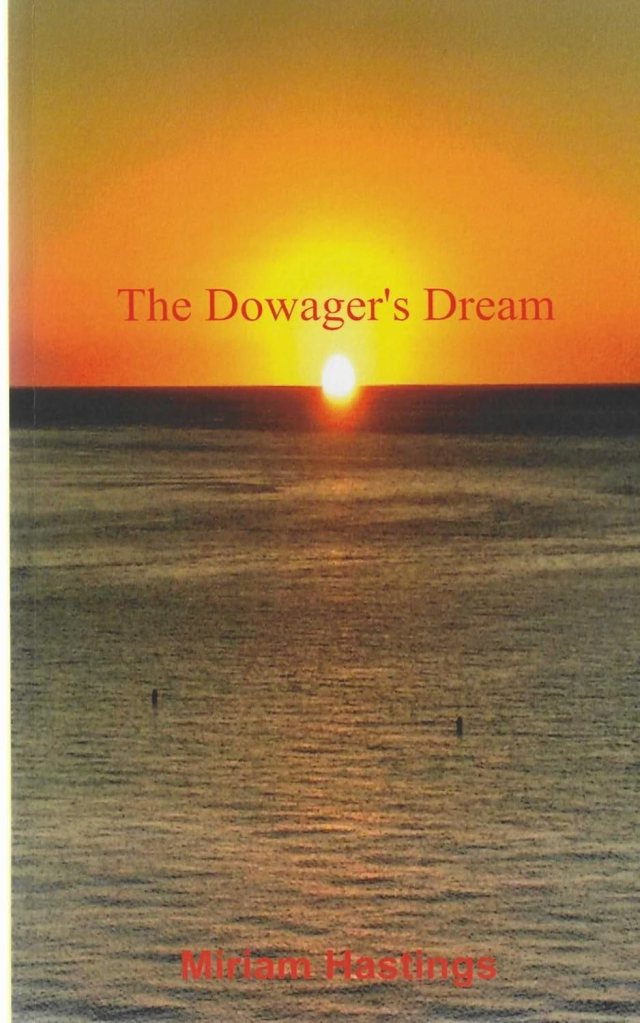
My novel The Dowager’s Dream, besides containing a fierce mermaid, has more than one character who feels rejected by the society around them. Over Christmas week, this novel will be 99p on kindle.
There’s little in the fiction world that generates more polarised views than this: past tense vs present tense fiction.
Author Kate Rigby – photo is hers
Recently I was in a Facebook Writers and Readers’ Group, when one member asked if she was the only one who didn’t get on with books written in the First Person Present.
I must say I don’t mind what tense a book is written in as long as the writing is good and the book engaging. But present tense does lend a book immediacy. Now I get that it’s not everyone’s cuppa, that’s fine. But it’s an opinion, a taste. That’s all.
However the discussion got quite heated, with one reader becoming quite dictatorial about it. This veteran reader was doling out advice of ‘stick to the past tense…unless you are…’ (named authors I’d not heard of). As I say he was a seasoned reader but he had no time for seasoned authors who might not write in his preferred tense or genre. He then went on to make some comment about ‘alienating readers at your peril’ but from his comments, I doubt that any of my books would have been of interest to him, since they employ the very devices he doesn’t have time for. I write literary fiction, not commercial fiction, and frequently employ present tense if the story demands it. If you read and write in the literary tradition writing in the present tense is second nature.
Another author also joined in the debate with the advice that ‘writers should stick to the past tense’. Really? I tried to debate this by arguing that there was no ‘should’ about it – that it’s a personal preference for a particular narrative style but she wasn’t having it at all. She justified her stance with ‘Did Stephen King or J K Rowling use present tense? I rest my case.’
Personally I’ve not read J K Rowling and although I’m sure her books have adult appeal too, they aren’t really my bag. At the same time I totally admire her success and her ability to tap into an archetype at the right time and turn it into a commercial success. Kudos to her and anybody who has success on a mass scale. But, not everyone is setting out to write books with mass commercial appeal. Many of us write niche.
The two reactions described above are by no means unusual. Some readers and authors demand tradition. However this wasn’t a present tense vs past tense debate at all. It was a commercial vs literally fiction debate. Literary fiction authors often use first person present. The author in the above-mentioned debate went on to say how she does a blog on writing tips. This concerned me, that she is telling new authors how to write.
Of course there are rights and wrongs of writing. Some novice authors will often switch between present and past unknowingly. In another part of the discussion tense-switching among inexperienced writers came up, and yes, this is a fair criticism. Unwittingly slipping into past tense when writing a book in the present tense is a mistake of the inexperienced. The key question is – was it intentional? Many experienced authors switch tense as a device. Many write in past and present tense in the same book and it won’t always be an obvious use of them either. I have seen accomplished authors write about the recent past in past tense and the more distant past in the present tense. It works. I have seen accomplished authors, not only switch tenses purposefully to great effect, but also switch from first person to third and even to second in the same book. This is a common narrative technique with literary fiction.
Once again, in this debate, many critics of both first and third person present, tended to think it was unusual or gimmicky or new, because of books like The Hunger Games (I’ve not read them) or because of WattPad. However, seasoned readers of lit fic will know it’s neither new nor unusual. The following authors have all used present tense in their books – many of them award-winning: Kate Atkinson, Margaret Atwood, Jessie Burton, Eimear McBride, Emma Donoghue, Jon McGregor, Hilary Mantel, Wyl Menmuir and many more.
If people don’t like present tense, it’s their prerogative, just as it’s mine not to like Westerns or Paranormal or things with werewolves, as long as they know that it’s purely subjective. But to dismiss all present tense books out of hand, for this reason and this reason only, is a bit like dismissing all pop songs in third person past tense.
If you’ve stumbled onto this post without reading part one, Author Lessons: Writing Community, Social Media, Newsletters, and Support, you can find it here. Part two covers the rest of the lessons I’ve learned in the last nine years. They are based on my own experiences and may be different from yours. I’m just sharing what I know in case it’s of help to any other writers traveling the same path.
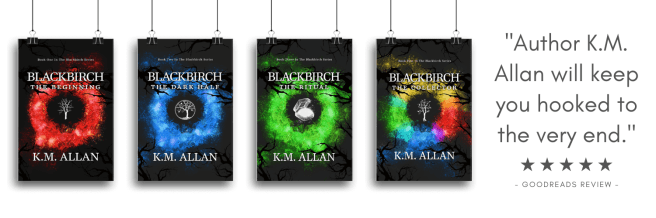
image belongs to K.M. Allan
Author Lessons
Indie Publishing
Like most writers, I took my shot at traditional publication. I queried for several years, got rejections, 2 full requests, and even signed a small press contract.
In the end, all books published under my name so far have been indie published by me. There are many ways to do this, and a quick Google search will no doubt give you step-by-step blogs by more seasoned professionals.
As this post is about my author lessons, this is whatmy experiences in indie publishing have taught me.
Four years ago, I went with IngramSpark. Nowadays, good practice is using Ingram or Draft2Digital to go wide (all retailers but Amazon), while also publishing directly with Amazon.
I’ve recently heard rumblings you can now also go direct with Apple, and Barnes and Noble, etc, but I suspect that’s a US thing.
When I was researching publishers to go with, I did look at Draft2Digital, but they don’t have a printing facility where I live, and Ingram does. This means it only takes mere days to get physical copies of my books. I also found that the print quality of paperbacks is better with Ingram than Amazon, which is another reason I chose them.
Ingram used to charge to publish books. Now they don’t, but if you need to make changes, such as fixing typos or updating your book content, it will cost you. I have heard Amazon allows you to update your files without incurring a cost, but again, I currently have no personal experience with the inner workings of publishing through Amazon.
Another tick in the going with one publisher box was not wanting to check separate places for sales. Ingram has one dashboard, and it’s easy to run reports from.
Can you now guess where I sell most of my books? Yep, it’s Amazon. A place where I’d get higher royalties if I was going directly with them (and that’s on me). I also have one reader who has so far bought every ebook I’ve released on Kobo, and occasionally I’ll get an Apple Books ebook sale.
As an indie publisher, you’ll set the recommended retail price, but Amazon and others don’t have to stick to it, and they usually won’t.
Sometimes you’ll see your books on sale and be able to tell people who will hopefully take advantage. Other times, you’ll see it so ridiculously priced that even you wouldn’t buy it. No one else does either, and months will go by with no sales.
As for advertising your books and marketing, this is the hardest part of publishing and is a constant uphill battle. I’ve heard mixed things about doing paid ads, particularly Facebook ads, and it’s not something I’ve waded into (yet).
My first book release was at the start of the pandemic when everyone was reading and I reaped the benefits. I’ve also released two books at the end of the pandemic when no one was reading or spending money and suffered the consequences—just like every other author.
I’m in two minds about Amazon. They seem to punish writers who aren’t using them. More than one release day has been marred by people not being able to order my books because Amazon listed them as “Unavailable”—all because they’re coming from Ingram and not them.
I can tell you from firsthand experience that if readers can’t buy your book when they want to, or they see a message that it’s not in stock and there is no date for when it will be in stock, you’ve lost a sale.
I’ve also read recent horror stories on Threads of Amazon suspending writer accounts and canceling pre-orders, which are sales most indie authors won’t get back.
I’m also sure I’ve had some sales they have never been reported to Ingram. That’s not to say Ingram is fantastic either. If you contact either company about lost sales, incorrect listings, missing covers, or outrageous prices well above the RRP, they blame the other companies and say everything is out of their control, leaving you with very little control.
I’d love to sell my books directly from my website, but the cost of postage makes it impossible, even within my own country.
Lesson learned: no publishing place is perfect, and all will frustrate you. Weigh the pros and cons for yourself and go with the company that’ll work best for you. Maybe one day there will be better solutions, but for now, we can only work with what we’ve got access to.
Burnout
Posting on social media consistently, writing manuscript after manuscript, being in the query trenches or on submission, and just being in an endless loop of waiting to hear what others thought of your MS/pitch/query/submission pages, and checking if your last post got enough views/likes/comments or was swallowed in the social media void yet again, takes its toll.
Doing all of that, being in that constant state of waiting, plus the internal drive to get better in an industry where you’re only as good as the last piece of content posted or book published quickly leads to disillusionment, burnout, and self-doubt.
Lesson learned: remember that you got into this because you love to write, that you keep trying because you love to write and you want others to read what you wrote, to connect with it like you do. If you find everything else is robbing you of that love of writing, take a break. Reassess things and always go back to writing.
Author Extras
The trend at the moment for author extras seems to be character artwork (made by fellow artists, not AI) and if that is something you can afford and want to include, go for it.
I haven’t commissioned such work, so I can’t speak on it, but I can say the author extras I’ve spent money on have been bookmarks, enamel pins, a tarot card based on one featured in my series, tote bags, mugs, and chocolate bar wrappers (this post contains some pics if you’re curious). These were done as giveaways to beta readers, book launch comps, and book launch swag.
I’ve also invested in business cards, which I took to my first writing conference in 2017. They were left on a table, along with everyone else’s cards. I still have a box of them sitting in my desk drawer. There haven’t been too many other places to hand such things out as COVID killed off a lot of in-person conferences.
If you go to such events often, it is a good idea to have either a business card, bookmarks, or other swag you can hand out. I suggest using a QR code on them so you can keep the info updated. My business cards have an old domain on them (which still works) but it makes me hesitant to hand them out as I know it’s not the latest and easiest info.
Lesson learned: if you can afford to get some author swag, do it. If you can’t, don’t. As much as social media would like you to believe that a release that doesn’t include sprayed edges, limited edition hardcover copies, or a candle that can be included in a giveaway box means your book will fail is all wrong. Make the best book you can. That’s the priority.
If you want extras and can swing them, go ahead. They may garner attention, but if the book is bad, a sticker of the cover art will not improve its standing amongst readers.
Control
One big lesson I’ve learned is that you have control over what you initially write. And that’s it.
The book those first few drafts will become is something you have less control over as feedback from editors and beta readers will change the book’s shape. Then, when it’s released, you’ll never have control over how it’s received, how and when it’ll be reviewed, how much it’ll sell, if your promo posts work, or if it’ll be picked by readers, let alone a bookstagrammer that will make it go viral.
Lesson learned: all you can control is the words, the next book you’ll work on, and your reaction to everything. Focus on those things, and learn to let go of everything else.
Writing Project Grief
One surprising thing I’ve gone through when finishing a writing project is a grieving process. Wrapping up a book series that was a part of my daily thoughts and life for a good chunk of time (twenty-two years) hit harder than I expected.
Often, a work in progress that spans years becomes part of your life as you write it while trying to figure out who you are. When you finish that project, that part of you is now also gone. So are the hopes you once felt for this idea that bloomed into something so big.
Some books achieve what you want—getting written. Others almost hit that ultimate writing dream. You may have landed goals you never dreamed of, such as signing with an agent, a publisher requesting a full, getting all the way to an acquisitions meeting, and signing a contract. Or you could have watched all those things happen to others as the years and luck passed you by.
Sometimes, even when books achieve more than you dreamed, they still don’t hit the specific expectation you wanted, so you grieve that too.
That writing project isn’t the breakthrough you’d wished for, but now a backlist book you hope will eventually be discovered by others.
Lesson learned: your next book may not live up to your wildest dreams, or it may surpass them. Write the books of your heart, adjust your expectations to reality, but always keep a little sparkle of big-wish hope. It’ll keep you going.
And those are my author lessons. I hope you’ve gotten something from these two posts, and if you have questions about what’s been written, or want to ask more, let me know in the comments.
While I’ve been writing for over twenty years, as of 2024, it’s been nine years since I launched my author accounts.
Later this month also marks one year since I completed my debut series, Blackbirch. When I started writing an upcoming blog post to mark that occasion, my habit of rambling off-topic led to lessons learned in the authoring game—so here they are!
Author Lessons
Every writer’s journey is different, but we’re all striving for the same goal, and that’s to put our art into the world, hope it finds an audience, and go with the lowest of lows and the highest of highs.
Because of those shared goals, I’m going to share parts of my journey regarding the lessons I’ve learned as an author.
When I started taking writing seriously, there was a lot I didn’t know. There’s still a lot I don’t, but there are some things I do thanks to years of consistently running social media accounts, blogging, and releasing books.
I wish I could say I was a runaway success at any of these, but I’m just like most people—putting myself out there and hoping it works.
The Writing Community
The first lesson I’d advise, and what I did, was join the writing community.
Even though writing is a solitary effort, I would not be where I am today without the friendships made and the support I’ve received.
My intro to the writing community was kick-started by starting social media accounts, this blog, and interacting with fellow writers. I’ve had friendships develop from beta reading and swapping manuscripts with writers in other countries, some of whom I count as good friends today. I would not have made those connections without putting my little introverted self out there, and you can do the same.
What I’ve also found in the writing community are fellow writers who will encourage each other, write with each other regularly for years, meet up in real life, go on writing retreats together, beta read for each other, and support each other’s books. As a part of the community, I’ve also read some of the best books, and found new favorite authors with backlists I’ve devoured.
While a reason to join the writing community is to get your name and work out there, it’s also about making connections. Find friends, not just potential customers/readers. They will help you more than paid assessment services, will lift you up when you get bad reviews, rejections, and disappointments, and encourage you when you feel like giving up.
They’ll support your books and you, and if they’re writing too, they’ll understand. They know what it’s like to put your heart and soul on the page and not have it come out how you want it to.
Lesson learned: the writing community gets the ups and downs because they are in the trenches too. It might take you a while to find others you mesh with, and writers will come and go from groups just as friends do in your life, but it’s all worthwhile.
Social Media
Years ago, I used to worry about taking time off from posting on social media, because if you took time off, you’d come back to no engagement and fewer followers.
Now, there’s so little engagement across all platforms that most people don’t even notice when you’ve taken a break.
You can do absolutely everything in your power on social media and follow every tip posted by those who have been successful, and in the majority of cases, nothing changes.
Don’t burn yourself out over it. Do what you’re happy to do. If you like making and posting graphics, do that. If reels are the only thing you can create at the end of a long day, post reels. If you can swing posting Monday to Friday, but take weekends off, take the weekend off!
I spent years posting 6 days a week, trying to find the exact right time, and the right posts, and you know what happened? My social media numbers grew quickly and then stopped.
On Instagram, I quickly gained over 2,300 followers—and that’s it. For the last 9 years, my follower count has stayed the same. Doesn’t seem to matter what I post, who I follow, or what I do, I can’t grow the numbers. Occasionally I’ll go up by 5, but that number then dwindles back down.
My Facebook author page has limped up to 600-odd followers. Twitter for a brief time was the best and got to around 3,000, but then Twitter went to crap, the majority of the writing community left, and I barely check it anymore.
My blog/website has had the best growth and follower count. Almost 5,000 of you amazing readers follow my posts, but like everything in 2024, the algorithm has strangled reach and engagement is now down here too.
Do you know how I get any new followers now? From real life. The few times a year I go to a book event, everyone just looks each other up on Instagram and then we follow each other to keep in touch. I’ve gained more followers doing that at two recent book launches than I have for the last two years.
Lesson learned: You can’t control social media, you can do everything “right” and still not get anywhere, which you’ll of course blame yourself for even though it’s out of your control. So…
Post what you enjoy and what you’re comfortable with.
Post when it suits your lifestyle, not rumored rules that no one can verify.
Accept that you can’t control it all.
Engage when you can.
Don’t expect others to reciprocate with likes, comments, and shares. Most don’t, and most of the time it’s because they honestly don’t see your posts, even if they’ve been following you for years.
You’ll find people who will interact with you regularly—do the same for them.
If you’ve reached a point where checking social media gives you anxiety, take a break. The world won’t end.
It will feel pointless most days, and as much as I’ve moaned about social media, I wouldn’t have sold the books I have without it. The best way is to run your social media accounts, don’t let them run you.
Newsletters
From July 2019 until October 2020, I ran a newsletter. It was a free version with Mailchimp, so it didn’t cost me anything but time to put it together and send it out, and I enjoyed doing it when I first started.
Like my social media accounts, the newsletter got stuck at 210 subscribers, and then most subscribers stopped opening the emails.
In the end, putting together the newsletter content was taking time away from writing and editing, so I closed it down and now publish the content on my blog as my roundups. My current version of a newsletter is now encouraging readers to subscribe via email to my blogs (which you can do here).
Having a newsletter gives you direct contact with readers who are interested in your work, and isn’t reliant on an algorithm showing your content to others, so there will always be an incentive to start one.
If, like I did, you find the effort is costing you in other areas, no rule says once you start a newsletter you must keep it going for the rest of your life.
Lesson learned: always reevaluate what works for you, and don’t push yourself to do something you hate because social media (or blog posts like this) say you should have a newsletter. If a newsletter works for you, start one. If it doesn’t, don’t.
Support
You’ll never get more support than with the first of things.
First time in the query trenches. First full MS request. First rejection. First published book. You should celebrate all these things, and you’ll find most people will celebrate with you, and support your posts with shares, comments, wishes of luck, cover reveals, and release day announcements.
First books will be bought by friends, family, and followers who’ve been watching your writing journey progress and want to see what your work is like.
The longer you’re around, the more work you release, the different ways that support fluctuates. In a perfect world, every release of anything new will build and become more. In reality (for the majority) support drops off. Not because you’re getting worse, but because that’s life.
Lesson learned: support who you want, and don’t expect the same level of support back, or support to last forever. Always (and I am) be grateful for any support given, especially from those who show up year after year, release after release. They’re worth more than subscriber numbers or sale figures.
As this turned into a bigger-than-expected post, I’ve split it up for easier reading.
Part two can be found here and covers indie publishing with IngramSpark, thoughts on Amazon, burnout and self-doubt, grieving the end of a project, author extras, and what you can and can’t control.
In the meantime, if you have any questions about the topics in this blog post, drop them in the comments.











 Chasing Driftwood Books