Interview With Kate Rigby

Read on for an exclusive interview with award-winning author, Kate Rigby!

1. First of all, for anyone that doesn’t know about you please can you provide a short introduction. Where are you from, what do you write and how long have you been writing? (As well as any other info you feel relevant).

Thank you. It’s a real pleasure to be interviewed and I’m very thrilled to  be part of the Chasing Driftwood Collective. I  was born in Crosby, Liverpool and now live in South Devon. I’ve also lived in Cirencester, Bournemouth and Wimborne. I started writing my first novel at the age of 19. My mum was writing a novel and going to a writers’ group when I was about 17. I had an idea for a book so I was able to pick her brains. I don’t know if I’d have started so young if it wasn’t for her as, unlike today, not many people wrote books in those days. Or if they did they didn’t shout about it! But it took me five years to write my first novel, now called Did You Whisper Back? I sent it out to several places and then rewrote it years later with the help of a Southern Arts bursary. It was picked up by an agent but not placed with a publisher. All told, I have been writing for over (coughs an indecipherable figure into hand!) years. I have mainly written novels but also some non fiction, short stories, flash fiction and poetry. In fact, I’m writing a lot more shorter stuff lately.

2. You are known for your hard-hitting and gritty fiction, which is unapologetic in its presentation of difficult themes. What is it about writing these kinds of books you enjoy? 

I’ve mostly started with the characters, who are usually troubled in some way or in some sort of challenging situation.  This often means the themes will also be thorny and hard-hitting: someone struggling with disability, bullying, child abuse, drug addiction, mental health issues and so forth, as well as the normal pains of growing up, love triangles, sexual exploration, family problems or societal conflicts. It’s satisfying as well as challenging to put my characters through difficulties they need to overcome although I don’t go in for neatened off endings. Often I leave them open-ended. I think it’s important not to shy away from difficult themes but to tackle them. My novels tend to be predominantly character-driven and a bit niche. They’re also what’s known as lit fic in the sense that they’re a bit more experimental with viewpoint, style, structure and so forth which is the kind of book I also enjoy reading.

3. One of your most notable novels, Down the Tubes, deals specifically with substance abuse. What is it about this book in particular you feel sets you apart as a writer, and how did your previous career aid with this?

Working in this field for years left a lasting impression. I met so many traumatized characters who’d experienced devastating abuse in childhood. Michael, the main character in Down The Tubes, wasn’t based on one particular character but he was typical of some of the people I came into regular contact with through my work or heard about via my fellow workers. Of course, I was able to weave the theme of working in the addictions field into the book too and add a dramatic element by having Michael’s mother applying for admin work in this field. This meant she would uncover shocking truths about her missing son.

4. Down the Tubes continues with a follow up novel, The Colour of Wednesday. What can readers expect from this sequel and how long had it been between publishing the first and second novel in the duology?

Those who read Down The Tubes mentioned they wanted to know what happened next but I never intended to write a sequel!  It just suddenly came to me about ten years ago what Michael’s story was two decades on from that novel, particularly in relation to the death of a family member, which played out in real time. I don’t want to say too much about the plot but the death is the catalyst for all those unresolved past issues and a return to addiction and self-destruction. Addiction is so often a lifelong battle. There are more relationship and family strains as his past comes back to haunt him and new revelations come to light. With the help of a new friend, Michael hopes to get his life back on track again. The Colour Of Wednesday explores the dark interior world of grief and past pain, while looking toward a redemptive world of hope and self-discovery.  It was nearly twenty years between writing Down The Tubes and The Colour Of Wednesday, although Down The Tubes has had many rewrites since I first penned it!

5. You’re very vocal online about your experience with neurodiversity. What can you tell us about your experience and how this plays into your life as a writer?

Yes, I’ve been writing for over forty years and  yet was only diagnosed as Audhd (both autism and ADHD) in 2022 so I was very late diagnosed. It just didn’t occur to me that being involved in the creative arts and also being neurodivergent is such a common thing!  That compunction and compulsion to create; that hyperfocusing on your special interest – it should have been a giveaway but it wasn’t. This also links into what’s known as ‘maladaptive daydreaming’ (though I prefer not to use the word maladaptive). I did a video on this with my sister as we both used to spend hours inventing characters and acting them out from childhood. Most people who engage in this tend to do it on their own – probably in the absence of having a fellow daydreamer!  Obviously, I also spent a lot of time doing it as a solitary thing too eg during lessons at school or walking to and from school or work. I lived much more inside my head than outside and writing became a channel and outlet for this too. But so many women are getting a late diagnosis now because our understanding of neurodiversity – autism, ADHD and other forms such as dyslexia, dyspraxia, bipolar etc – has massively evolved in the last ten years or so. Prior to that, and especially for women who grew up in my era, it was something that was only thought to affect young boys, or some male adults as in Rain Man.  Women and girls also have gone under the radar because of their greater tendency to mask and a greater pressure for them to ‘fit in’ socially. But the more women and girls share their experiences the more awareness is raised  and common misconceptions challenged. This is partly why I have embraced my diagnosis by starting my own videos on YouTube and TikTok and sometimes with an accompanying written blog which I have called Authism (autistic author). I realised there are so many areas to explore as an autistic author: like reading processing speed, plotting a novel, the addictive nature of writing itself and so on, as well as the non-authorial topics. So much has been a revelation to me.

6. In addition to the above, are any of your characters neurodiverse? And if so, was this intentional at the time or something you’ve discovered emerged organically later?

That’s very interesting because that was another reason I began my videos and have done some on that very subject. For instance, Helen in Fruit Woman finds it hard to concentrate on the world around her and has always lived in a bit of a fantasy world with her sister Cathy. This has been a way of coping with the pressing demands of the real world. People remarked on Helen being like a teenager rather than someone of twenty-seven. Many autistics much older than Helen are just as child-like and young for their age! Helen is naive and doesn’t always see danger. At their old Devon holiday haunt—Myrtle Cottages—Helen’s best friend Bella accuses her of being ‘deliberately obtuse’, unable to believe she could be so clueless. But Helen tends to take people at face value. She is ultra sensitive and feels things more intensely than most of her contemporaries. As children, she and Cathy didn’t always understand the social rules. It was hard for them to fit in and they were therefore susceptible to bullying.

I did another video and blog about Carrie in The Other Side Of Carrie Cornish who is hugely affected by neighbour noise. Here’s an excerpt from that blog:

“There’s no doubt in my mind now that Carrie is autistic but when I began writing it in the noughties I had no idea. But this books is semi autobiographical. I couldn’t finish it at the time as it was too close to my own experiences so I rewrote it some years later. But you’ll find no mention of autism in the book at all. Carrie does however mention her anxiety, her panic attacks, her social anxiety and agoraphobia. She withdraws into her fantasy world with her alter-ego—Seroxat Sid. We also see that she suffers with noise and light sensitivity and other sensory overload and trichotillomania (hair-pulling) though she doesn’t refer to it by name. She refers to trichotillomania or trich as a guilty secret. I didn’t know for years that this is what’s known as a ‘stim’ (or self-stimulation) nor that it’s a very common stress-buster in autistics.”

There are other characters I want to highlight in future videos. But in answer to your question it definitely wasn’t intentional! I can only observe neurodiversity in my characters retrospectively.

7. Being a writer, especially indie, you are expected to do anything and everything for your books… Including marketing! As a writer who has embraced TikTok, how are you finding it and what advice do you have for others?

Like most of us indies I loathe marketing with a vengeance! We just want to get on with the fun stuff right? 😊 But it’s one of those necessary evils. I did think doing videos and blogs, combining content of interest to fellow audhders with my own writing would be a novel approach (no pun intended!) But there are so many other aspects to my own autistic journey that it’s not always easy to limit it to writing so I have branched out a bit. I know TikTok does have a shop but I’ve not tried selling on there yet so I can’t offer any advice there, I’m afraid. I’ve had more engagement on YouTube, if I’m honest. I think it’s a very different demographic there and people tend to subscribe to your channel because they’re interested and watch the whole video. The TikTok analytics show that most people only watch a couple of seconds before moving on to the next one. It’s very fleeting and fast moving on TikTok, I guess, with lots of competing content (not to mention flashing and sensory stimulation – an audhders nightmare!) There are a few people I follow on there and vice versa. But I can only deal with it in small doses. 

I also set up a Facebook group for autistic book lovers: readers and writers. Originally I had assumed that voracious readers who can’t get enough books to read, and prolific authors who are always needing more readers for their books, would be a match made in heaven. But it hasn’t quite panned out like that yet. Still, as with any group there are a few regular engagers and hopefully a small community building. There is also a spin-off Facebook page, too, for books by or about autistics.

8. One of your books, Fall of the Flamingo Circus, was first published in the late 80s. What can you tell us about this book’s journey? Do you remember what first sparked the idea? And how was the publishing process? Tell us everything!

I do indeed remember what sparked the book – this was actually my second novel. But I invented this character Donna in 1977 at the time of punk and she just took off (with the help of my co-creator sister who also invented a male punk character at the time. He was called Laurence, so Lauren seemed a perfect choice of name – a kind of amalgamation of the two, if you like!)

I only recently brought the book back out into paperback after all these years but with a new introduction, charting some of the book’s history. I originally submitted it to a small press – the Malvern Publishing Company – who snapped it up in 1988 but they only published hardback books. Acceptance was so thrilling as well as scary! I felt on cloud nine for a few weeks, pinching myself every so often. This didn’t happen to people like me, surely?! I’d had four years of sending out my first novel. Malvern negotiated paperback rights for me and managed to get me a review in The Times. Fall Of The Flamingo Circus was then published by Allison & Busby in 1990 and US hardback in the same year (Villard). There was no Print on Demand (POD) back then, so the UK paperback was ‘remaindered’ after about 18 months having sold about 2000 copies which was sort of average, I gathered. But no great shakes.

I had attempted to get Flamingo Circus back into print with a traditional publisher but once I went ‘indie’, I prioritized those books of mine that had never been in print. It was enough for me just to get Flamingo Circus into e-format in 2012 because I had no electronic copy. I found some software on my computer called Optical Character Recognition (OCR), and that’s how I did it, page by page. Once in digital format, it’s a cinch to go from there to print. It was just a question of finding the time.

When I came to put it out in print again, thirty years on, I wondered whether I should now rewrite it in the way I originally should have. My character, Donna, was a singer in a punk band called D.K. and the Dildos 😃 (DK being her initials). She wrote some songs and the band also made some records but I guess I didn’t know much about the logistics of that. This is the main change I would have made. She was a ballsy character wanting to be at the forefront. I would probably include her original details, birth date, sibling names and so forth. She was from Hull but I knew nothing about the place. As mentioned, she ‘hung out’ with some of my sister’s invented characters who some of the book’s characters were based on. Tramp was based on Laurence; Alec on Adrian and so on. But these characters were so real to us that it would have felt like libel! But the characters of the book have taken on their own lives and the spirit of Donna is completely in Lauren.

I would have perhaps included more music too. That’s perfectly OK nowadays, whereas back then it was less the thing, maybe… 

Some of the language used is from its time but may not be acceptable today.

9. Writing has been part of your life for so long, what keeps you so inspired to keep putting pen to paper? Is it something that comes easy to you from initial idea to final concept? Or is it a longer process? Are you a plotter or and pantster when it comes to fiction? Or both!?

I think it comes back to the fact that I need to write, which I know many other authors will understand. It is a compulsive thing, which becomes second nature. You hear a song which triggers a memory, observe something in nature or in your environment, hear about someone’s experience on the radio, or recall a conversation or turn of phrase. I think when you’ve been writing for so long you have a glut of half-formed ideas and notebooks, some of which become fully fledged novels, others may be used in shorter pieces. Others are still waiting for the right story. Sometimes they are small cameos which lend themselves to flash fiction. Once I have an idea,  I usually like to see it through. The idea or concept isn’t difficult but putting the flesh on the bones and working out subplots is much more challenging. I usually sketch out a plot which evolves as I go along but the freedom of pantsing suits my way of writing. So I think I’m a bit of a planster!

I can sometimes get distracted by too many subplots, with an inability to see the wood for the trees. This also relates back to my executive function challenges!

This is, maybe, why I like to write slice-of-life or stream of consciousness fiction where plot is looser and I can make use of flashback and less linear sequences. Luckily this is de rigueur in a lot contemporary or literary fiction.

10. Finally, like so many others, I am on tenterhooks to find out what is coming next! What can you tell us about any upcoming projects you have (writing or otherwise!)

Thank you! Well, I’ve been trying to write memoirs for about three years and had the idea around 2016. It’s the longest thing I’ve written and it will need massive shaping and possibly being made into several books. I can’t wait to get to the end of this epic first draft and get to work with sharp lopping sheers! It’s far too long and unwieldy as is. The trouble is, I have kept a regular diary since late summer 1975, and so I get lost in rereading them and making notes. I don’t want this to be too chronological if I can help it but I have to go through the dairies chronologically. I’m at last up to 2020. In a way it was easiest (and most satisfying) going through the earliest years of my life when I was just reliant on key memories. When you’ve been working on something for so long you inevitably change your perspective and how you want to go about it although I’m not sure my initial premise is that original at all; it’s not as if I’ve lived an uber interesting life compared to many.  But I’m just trying to get it all down at the moment so I can move onto the more creative stage.

In between times, I’m keeping going by writing the shorter pieces. For instance, I have written a short story spin-off to my very first novel Did You Whisper Back? I hope to bring that out as a stand-alone first before adding it at as an epilogue to the main book. I’m also writing a lot more poetry. I would love maybe to bring out a poetry and flash fiction collection and also to explore audiobooks but that would be a big undertaking.  

A huge thank you to Kate for joining us today! If you would like to know more about Kate and her huge back catalogue of books then please follow the links below!

Links:

Website: https://kjrbooks.yolasite.com/

Facebook page: https://www.facebook.com/authorrigby

Blogs: https://authisticwords.blogspot.com/

http://bubbitybooks.blogspot.com

Instagram: https://instagram.com/kate_jay_r

TikTok: https://vm.tiktok.com/ZGJTtmSAk/

YouTube: https://youtube.com/@TheBubbity

Amazon: https://www.amazon.co.uk/stores/Kate-Rigby/author/B001KDR9GE

Goodreads: https://www.goodreads.com/user/show/4768025

Facebook book lovers group for Autistics:https://m.facebook.com/groups/243261171372852/
Interview with Miriam Hastings

Read on for an exclusive interview with award-winning author, Miriam Hastings!

WINNER of the MIND Book Of The Year Award! https://amzn.eu/d/0u4H7eI

1. You’ve written books and short stories in a few genres though I would say they are all terrifically character-driven – what is your favourite genre to write in? How would you describe your type of writing?

I don’t honestly think in terms of genre, either in my reading or my writing. I read a very wide variety of books and have always written in many different ways.

I think the type of writing I like to read always takes me into an entirely different world, whether in terms of a different historical period, or a very different geographical setting, or a different mental state, or an entirely imaginary place. If I had to describe the type of writing that I do myself, since different stories and books I’ve written cover all the above, I might say it was magic realism, or fantasy, or surreal historical fiction, or a different version of reality, or a unique internal world. But I still wouldn’t be sure that any of those labels can cover the type of writing that I do.

2. Going back to characters, yours are always very memorable. Is it the character who comes to you first or the story idea? What is the process like for you?

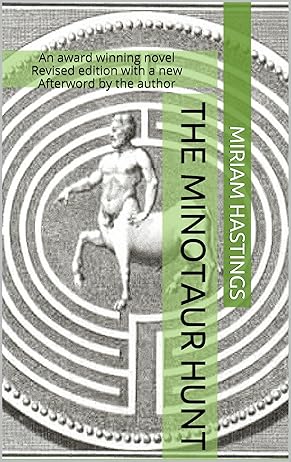
That’s a difficult question! It’s very hard to know the answer. In most of my novels there is more than one central character. In The Minotaur Hunt, my first novel, there are three central protagonists who are all very important. I think the first and youngest of them, Rachel, came to me first of all and I began the novel with her.

In Walking Shadow, my first historical novel, Edmund/Rosamond, William Shakespeare’s younger sibling, definitely came to me first; in fact, to begin with I was planning to write a very different novel around that character. The story idea of the gunpowder plot seized me as I did some historical research on Shakespeare’s theatre company, which led me to find out that they really were under suspicion of sympathising and possibly aiding the Catholic conspirators. I think it’s not coincidental that this is one of my only novels to have just one narrator.

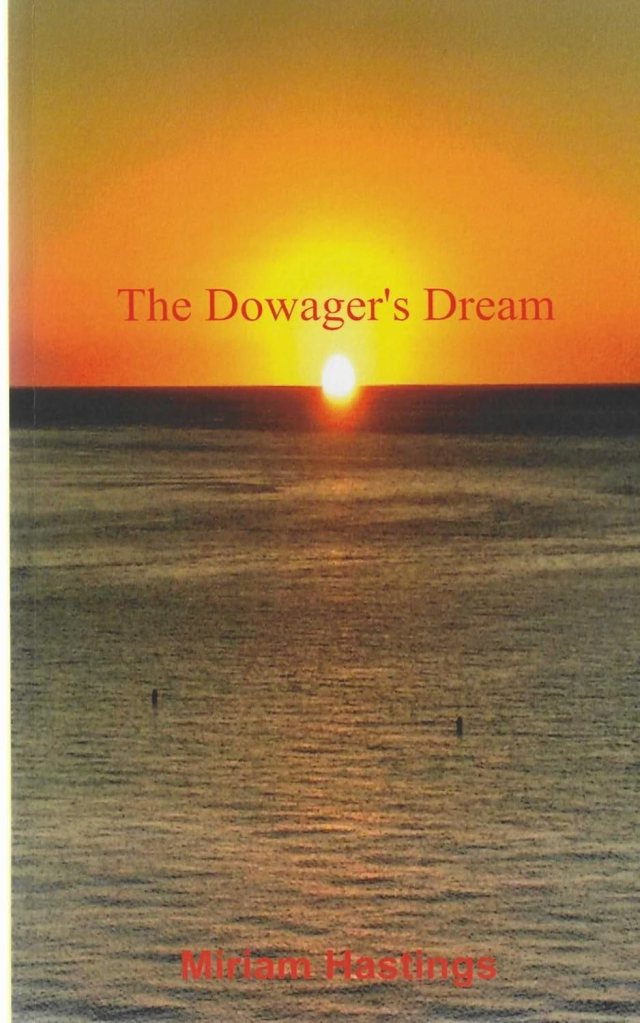
The Dowager’s Dream, my second historical (also a magical) novel, originally began with a mermaid. I found an old encyclopaedia of animals, published in 1840, that my partner’s father had bought many years ago in an auction of a dead Methodist minister’s library. At the end of this encyclopaedia there is a section on fabulous animals which includes a description written by the daughter of a minister, describing a mermaid she saw off the north coast in 1809. It was so detailed and matter of fact that I had to find out what was going on at the time. I wanted to know why such a proper and virtuous young woman, who had been brought up in the rigorous Kirk of Scotland, might see a mermaid. So that led to the creation of Mary MacKenzie and to my research on the Highland Clearances which I carried out over several years, spending all my holidays on the north coast of Scotland. It was particularly fascinating that in the process I discovered more about some of my own ancestors, and particularly my great-great-grandmother, Margaret Mackenzie, whose family was a victim of the clearances. The more I discovered, the more I became absorbed in the story of Mary and the mermaid and in the horrific displacement of the Highlanders and the complete destruction of their way of life.

3. Who is your favourite character from one of your books and why?

I don’t honestly know. When I’m writing a novel I become quite obsessed with the characters but after I’ve moved on to another book, I gradually forget about them as I become obsessed with the new ones. I find that if I pick up one of my old books, e.g. The Minotaur Hunt, I have this wonderful feeling of reuniting with old friends as I rediscover the characters. When I revised that novel for Kindle back in 2013, I wrote a short “afterword” revisiting the characters and describing their lives since the events in the story were over. I found I enjoyed writing it a lot more than I had enjoyed writing the original novel!

I suppose I often feel most fond of the characters I’m writing about at the time, but that is a generalisation. I particularly love the characters in The Dowager’s Dream, especially Mary, Kirsty, and the Dowager herself, and I think they are my favourites even though I have completed a further two books since I finished that one.

However, since childhood I’ve always had a passionate love for animal, particularly cats, probably because of spending so much time ill, alone but for my pet cat who always kept me company, so I have a special love for the animal characters in my novels, e.g. Patty cat in The Dowager’s Dream, and Abednego in my latest novel, Hospitality to Strangers.

4. Your last novel, The Dowagers Dream, was set in the early years of the 19th century, what sort of research did you have to do in order for the location and topics covered to be authentic?

Over about 6 years, I stayed on the north coast many times and during different months so as to experience the weather and seasons throughout the year. I also made the most of the clearance museum in the old Kirk at Farr on the north coast, and I’m very grateful to the archivist and librarian there who helped me a lot. I visited the museum in Helmsdale where there is also a library open to visitors and I was able to do some research there too. Then there were word-of-mouth stories as well, e.g., I usually stayed in a cottage owned by a sheep farmer, Joanna MacKay, whose grandfather was carried away as a baby from their homestead during the clearances. Hearing such moving and powerful family stories were an important inspiration.

5. Your novels cover gritty topics such as the divide between rich and poor, mental health, sexuality and more – what drives you to delve into these topics and how hard is it to frame them historically? I’m thinking in particular of Walking Shadow set in 1606 and The Dowagers Dream.

Ever since I was 14 years old I have been deeply concerned about the injustices and corruption in the world. In fact, at that age I became very depressed to the extent of being suicidal, finding it really hard to cope with growing up in a world as terrible as the one around me appeared to be. I had been ill throughout my early life and, spending so much time alone, I had always created vivid fantasy worlds where I spent most of my life. I think being able to control those fantasy worlds made it harder for me to be so helpless and powerless about the suffering I saw in the real one. At 14, I became politically active, joining the School’s Action Union and becoming involved in feminism, black power, and disability rights. My imaginary life, including my writing, has always been a part of my idealism, my belief in the importance of the links that bind us all worldwide, and our personal responsibility to help all those who have less than we do and those who are oppressed and suffering. I have always seen my writing as a form of political activism and my desire has always been to give a voice to the outsider in society. I want to portray characters who are disenfranchised and powerless, whether through their gender, their poverty, their ethnicity, or their religious identity. However, I really want to avoid being too dogmatic and preaching to my readers. Writing historical fiction is a good way of dramatising the evils committed today. History repeats itself and the human race seems incapable of learning lessons from the past. I try to show this in my books.

For example, Walking Shadow is a historical novel with profoundly modern themes: the fear of terrorism, political manipulation of information, and issues of religious fundamentalism and intolerance. As I did my research into the gunpowder plot, I was amazed to find that the language used about Catholics was identical to the language George Bush and Tony Blair used to demonise Saddam Hussein, Osama bin Laden and Al Qaeda, and that the anti-Islamic phobia following 9/11 was the same as the anti-Catholic feeling in England after the gunpowder plot of November 1605.

Similarly The Dowager’s Dream may be set in the early years of the 19th Century, but I hope the themes of dispossession, genocide and ethnic cleansing will resonate with the contemporary reader.

6. What are you working on next? Tell us about it!

Being quite severely disabled and suffering from chronic pain, I find it hard being an indie author since I want to be writing but I can’t do that as well as market and promote my books. At the moment I have a completed novella, The House of Consolación, waiting to be published, a long novel, Hospitality to Strangers, undergoing a final (I hope!) revision, and a half written novel waiting to be finished.

The House of Consolación is set in an isolated, hidden valley in rural Spain, based on two areas that I know and love. My love affair with Spain and the Spanish began when I was a young woman in a mental hospital. There was only one member of staff who helped me; my occupational therapist, a young Spanish woman called Carmen. She was a talented artist and a wonderful, caring therapist. It must be well over forty-five years ago but whenever I’m going through a bad time, I still remind myself of the wise and compassionate things she said to me. The novella is not a traditional work, the valley itself is one of the characters, and it’s up to the reader to decide whether the book is a collection of linked short stories or a complete work in itself. There are several narrators in the novella, it is their relationships to each other and the unfolding events around them that create the world of the valley.

The completed novel, Hospitality to Strangers, is set in the 1960s and portrays the troubled relationships in the Benedict family. Fred Benedict is a respected elder in the Redemption Hall Christian Fellowship. As the stable, conservative years of the 1950s fade into a more anarchic decade of change, he desperately attempts to protect his family from the worldly dangers he sees threatening them everywhere. However, his wife and three daughters wish to embrace the exciting new opportunities the 1960s have to offer.

While Fred tries to keep them all following the path of the Lord, it is he himself who brings the greatest dangers into the family. First, in the form of his father, Arthur, absent in Nigeria throughout most of Fred’s childhood. Fred longs for a close relationship with his father and so he persuades his wife, Nell, to allow Arthur to live with them in his old age. She only agrees to have him against her better judgement for she senses that Arthur is hiding many dark secrets. It is Deborah, their youngest daughter, who soon becomes Arthur’s prey.

Then Fred and the other elders invite Daniel, a charismatic African American missionary, to visit for a year, working with the Redemption Hall Fellowship. But Daniel brings change of a kind no-one is expecting.

7. What would you say are the highs and lows of being an indie author?

I think I’ve already covered some of the lows and difficulties of being responsible for all aspects of publishing your work, especially if you’re disabled, however, there are also many benefits. As an indie writer, you are in complete control of the process of producing your book so every choice is yours; be it of the title, the cover, the size, the font, where it is marketed and how. My first novel, The Minotaur Hunt, was traditionally published through the Harvester Press and while they were very supportive, being a first-time author and a particularly unconfident one, I felt obliged to go along with all their suggestions and choices.

8. Tell us what drew you to join the Chasing Driftwood Books collective and what hopes/plans do you have for the future?

Following on from my previous answer, the other great thing about being an indie author is the wonderful camaraderie, support and encouragement I have received from other indie authors. It was one of these brilliant writers, Kate Rigby, who invited me to join Chasing Driftwood. I hope that the inspiring example of the other members of the collective will motivate me into marketing my work more effectively.

9. Who are your favourite authors and why?

First of all, I would say that every writer in Chasing Driftwood is an excellent author and I recommend everyone of them. As a child I always loved books that contained magic and fantasy; I first discovered the Narnia books of C.S. Lewis when I was six and loved them, then when I was eight my older sister introduced me to the superb historical fantasies of Violet Needham and Joan Aiken. As an adult, I have always loved magic realism, e.g. the work of Angela Carter and Isabel Allende.

For several years I taught cross-cultural and postcolonial literature to mature students at Birkbeck College; the writers I taught included many outstandingly talented ones, such as Toni Morrison, Bessie Head, Nadeem Aslam, Amitav Gosh, and so many others who have inspired and challenged me as a writer.

Some of my past creative writing students have gone on to publish their work and I would warmly recommend them as well, e.g. Christina Giscombe and Margrethe Alexandroni.

10. What would you say inspires you to write? Or if you prefer, where do your ideas come from?

My desire to change the world for the better, and to help the traumatised and the oppressed to be seen and understood is my main inspiration.

Ideas for stories come from anywhere and everywhere, including my own life, past historical events that shock and move me, overheard conversations, other people’s stories, world events, my own family history.

Ideas are everywhere and anyone can access them, and then transform them into something else, something magical “rich and strange”. That is the glorious thing about being a writer!

A huge thank you for the very talented Miriam Hastings for joining us today! If you would like to find out more about her work and follow her for updates, please see the links below. Also, consider subscribing to our website for future updates on all our author’s books!

Website: https://miriamhastings.com/

Facebook page: https://www.facebook.com/MiriamHastings.author/

Amazon page: https://www.amazon.co.uk/stores/Miriam-Hastings/author/B00D1WEVO0?ref=sr_ntt_srch_lnk_1&qid=1727338572&sr=8-1&isDramIntegrated=true&shoppingPortalEnabled=true

Instagram: https://www.instagram.com/miriam.hastings3/

Author News

Welcome to Chasing Driftwood Books! Here you will find all the latest news on the authors within our collective, including sneak peeks, interviews, articles, offers and much more!

Sim Alec Sansford releases Welcome To Hollow Wood!

Read on for an exclusive interview with YA author Sim Alec Sansford plus the blurb and links for his latest release, Welcome To Hollow Wood.

Click here to view Welcome To Hollow Wood the trailer: https://www.facebook.com/share/r/twoMz24MmamyXCvB/

To buy Welcome To Hollow Wood: https://amzn.eu/d/7gBL6Eq

Can you tell us what inspired Hollow Wood?

Growing up I was always hooked on movies I was probably far too sheltered to be watching at the time––like SCREAM, I Know What You Did Last Summer, and a variety of other teen thrillers and suspense films. During my school years you would always find me in the library devouring anything and everything by R. L. Stine, too. I think that’s where my inspiration for not only this story but most of my writing stems … Good characters and irresistible twists, red-herrings, and reveals.

You’ve said this book idea came about a long time ago, but you only recently felt ready to publish it – can you tell us why it took so long?

Yes. This story first begun somewhere around 2012 when one of my university assignments for Creative Writing was to create the first six chapters of a novel. Whilst most of my classmates wrote deep, poetic romances and historical fiction, I was writing about teens and murder. At the time I couldn’t understand why they weren’t … It was so much fun!

Unfortunately, disaster struck when my laptop died and my hard drive failed to restore the file. I was devastated. All that hard work vanished, never to be retrieved. I thought about re-writing it all, but the idea of starting over and not capturing what I had upset me. I decided to put it to bed. However, over the years the characters wouldn’t stop running through my mind and in November 2021 I decided to add Hollow Wood to my list of work to complete by the end of 2024.

Does this book link to any of your others and if so, how?

In some ways this story does connect to others in the Sim Alec Sansford Universe (I really need to come up with a better name for it than that!). Hollow Wood is first mentioned in my debut novel, Welcome to Denver Falls, where it is the neighbouring town. In that book the there is a baseball scene where the Denver Dholes go up against the Hollow Wood Hawks.

Book two, which I’m working on currently, also makes reference to a character featured in my series Fortune’s Well. However, despite links to these series Hollow Wood is not paranormal.

What does your normal writing process look like from original idea to published book?

Blurb first. Possibly a little backwards, but I love creating engaging blurbs and mocking up cover art and teasers for my books. Yes—before I’ve even written them.

I find this helps me grow ideas, moods and themes for my stories. I find blurbs exciting. You get to hint at what readers can expect and ask questions that keep you hooked from the moment you open the first page.

From there I am very much a “pantser”, I let the story and characters take me and rarely force anything. If it doesn’t feel right then something in my gut is telling me to take a step back, evaluate and try again. This approach doesn’t work for everyone and it’s not something I recommend, but for me it works. I think of myself as a director plotting out a movie and I have to call cut a few times before I get it right.

Who is your favourite character in Hollow Wood and why?

That’s easy––Eliot.

I feel bad saying that because of all the characters who’ve stayed with me from the get go, Weaver is the one who’s been more prominent. In fact, he is the only one who still has the same name, home life, and personality traits from the original uni piece.

However, I love Eliot because there’s an edge to her. She is dark brooding, artistic, introverted, and absolutely addicted to music. In many ways I think she is a manifestation of a younger me. She’s also very damaged and spends a lot of her time pleasing others rather than thinking about herself. That’s a quality I definitely relate too, and although it has some draw backs I feel there’s a power in it.

You write in the YA genre – what do you like about this genre?

I feel like teen characters are far more complex. When you’re younger everything is heightened … love, lust, hate … revenge. It’s all so much more daring and exciting.

There is a nostalgia in YA too, it speaks to your inner self as a reader and a writer. It allows you to say the things you wish you had when you were that age. Do the things you were too scared to do. Likewise it allows you to revisit such a special, monumental point in your life. I’m not sure if I’d enjoy writing any other genre as much.

What are your favourite YA books and why?

I love a wide variety of Young Adult books. From paranormal romance such as Alexandra Adornetto’s Halo trilogy, to more contemporary realistic fiction like John Marsden’s Tomorrow series.

I just love reading about teen characters for the same reason I love to write them. Their lives are usually far more complex and the stakes are so much higher.

Halo definitely taught me a lot about romance and how powerful and all consuming love can be for younger people. Likewise, Tomorrow definitely showed me how strong the bonds of friendship can be and how ordinary teenagers (most often overlooked by the adults in their lives) can be the greatest heroes of all.

What do you hope readers will get from Hollow Wood? What kind of experience will they have?

I hope they get a story that they simply cannot put down.

I feel like this book, although short, has a lot of twists and turns which will keep readers on the edge of their seat. There will be answers, but ultimately a lot more questions. Again, this is a short novel for YA, but there is enough there to get readers absorbed into the world of Hollow Wood and fall in love with the characters.

I imagine the Hollow Wood series to be is a television show on the page. Book one is the pilot. It draws in the hype. You fall in love with the cast and fear for their fate in the sequel.

What are you working on now? What will be released next?

Currently I am working on the second book in the Hollow Wood series, currently titled Lie, Lie Again.

I am absolutely loving what I have so far and cannot wait to share it with you––hopefully very soon!

What is your favourite part of the whole writing process, for example is it the excitement of the initial idea, the first draft, or the last draft?

I absolutely love the feeling of having a new idea. That rush you get certainly can’t be beaten. When you get so excited about a story that you want to shout it from the rooftops. Ideas come easy to me, it’s the patience and dedication involved in writing that can be a challenge. I want so badly to spill everything out from my head and onto the page. I get so impatient. But then again, when you type those last few words and can see it all on there in black and white, it feels like such an achievement.

You never really know how a book will be received, but I write with one rule in mind––it’s all for me. I write the stories that I love to read. When other people love them too, it feels really great and affirming.

That’s the power of a great story, it make us feel a little less alone.

Thank you, Sim and good luck with the new release!