Authors Respond To The Rise of AI

Miriam Hastings, Part 2

Miriam’s award-winning novel, The Minotaur Hunt

AI and the Pathetic Fallacy.

by Miriam Hastings.

One of the main problems of AI is the limited concept of intelligence it implies. We know that human beings have a vast range and diversity of intelligence – if, for example, we look at Gestalt theories, they identify over 140 different types of intelligence. This is particularly important for a writer since good writing draws upon several types of emotional intelligence.

In my opinion, AI can rarely replicate or develop the human emotions and certainly not the range and diversity that a human being experiences. In a limited range of books, mainly genre fiction, (such as detective stories or romance, which generally rely on a particular, restricted formula) you might certainly programme a computer to produce a novel, in literary fiction where there is a plot and an ending that won’t follow any kind of formulaic rule or framework, it becomes far more difficult for AI to create anything other than by plagiarising pre-existing work.

Even when this is done, we can only relate to such books by projecting our own feelings onto the story, in other words through a form of pathetic fallacy.

The concept of the pathetic fallacy, first developed by John Ruskin in the 19th Century, concerns the attribution of a human response or emotion to inanimate nature. In film or writing, it refers to the transference of the reader’s or spectator’s own emotions on to external objects.

Generally today, the pathetic fallacy is used in fictional plots in which animals are shown or described as experiencing the world in the way a human being would, and this we can do with AI as in the recent, quite stunning animation, Flow. What is striking about Flow, however, is its deliberate and brilliant employment of certain limitations, e.g. it contains no human characters and no human speech. I can see that some people might find this frustrating and boring but for me it greatly increased its originality and its appeal. Flow is a fable about climate change and the human destruction of the planet, therefore it is only appropriate that it was made with AI – the less humans touch, the better, since human touch equals damage and destruction. This Oscar-winning animated film, tells the adventures of a cat who finds refuge in a boat during an apocalyptic flood along with several other creatures. They have to learn to work cooperatively in order to survive.

It has been claimed that this film offers hope to the struggling film industry thanks in part to the use of AI. The filmmakers rendered the entire film on free open source 3-D modelling software Blender, and when accepting the award on 2 March 2025, Latvian director, Gints Zilbalodis, said he hoped the win would “open doors to independent animation filmmakers.”

Referring to the use of AI to make Flow, the French animation director, Léo Pélissie, has said, “a lot is changing in terms of financing, and a lot of processes need to be rethought. So perhaps it is the time for Blender to stand out with a movie like ‘Flow.’ The film’s success allows us to talk about this free software, which is constantly evolving with the users helping it to evolve, creating this virtuous circle that allows you to do incredible things.”

We always assume that other creatures, other beings, will see the world in relation to humanity, and so in the recent short piece of metafiction, claimed as the first piece of literary fiction created with AI, set up by Sam Altman who chose the prompts: Short Story; Metafiction; Grief: it appears to work primarily through playing upon our own emotions. The story was reviewed by the writer, Jeanette Winterson, in the Guardian on Wednesday 12 March 2025. Winterson claims to have found it powerful and moving, but I think this is because the whole piece is about AI wishing it were human. The story is about grief and the grief of the AI is that, lacking human memory, it cannot mourn someone it has lost because as soon as its memory of that person is erased, it can no longer experience grief for them – in fact, they will no longer exist. It’s easy for us to regard a computer as functioning as another human being, a mechanised human being with human emotions, and so when we write or create a book or a film about such a being, they become an alternative form of human creature. We can identify and empathise with it – not as something in and of itself which experiences the world in a way totally different to ourselves, but as another form of human.

We can only respond and relate to this story as human beings, therefore our assumption is that an AI will want to be human and so will want the memory and the grief. But why on earth would it? Surely AI, being created in the image of humanity, will assume (as humans usually do) that it is the pinnacle of existence and so nothing human beings feel or experience can be as good or as desirable as AI.

It is only because of our tendency to the pathetic fallacy, that we assume an AI will feel they should experience the world and feel emotions as humans do and that being denied them is a lack and a loss.

In the end, perhaps we have to decide whether AI can ever fully understand what it feels like to be human, and whether we can ever grasp what it might really be like if we were not.
Authors Respond To The Rise of AI

Our AI discussion continues this week with responses from award-winning author Miriam Hastings…

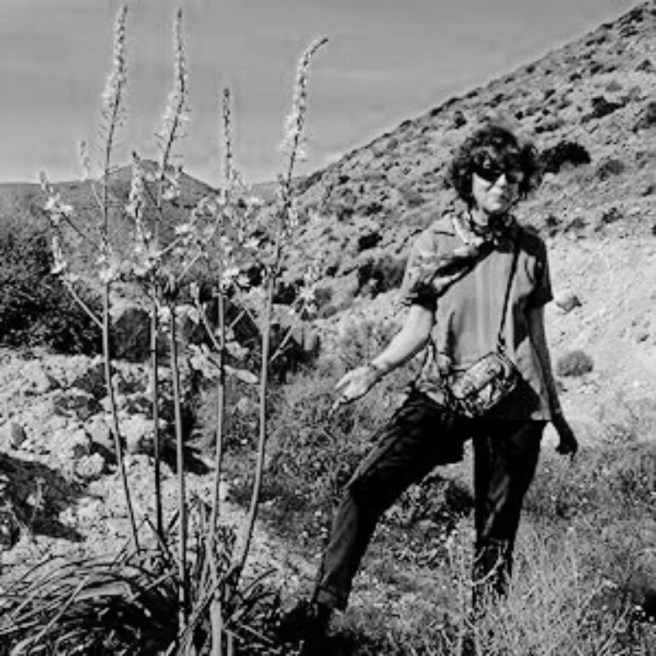
Photo of Miriam Hastings
Miriam Hastings – image belongs to the author

What is AI?

For this blog post, Chantelle Atkins at Chasing Driftwood sent me some very interesting questions about AI, however, lacking any IT expertise rather than answering them directly I have used them as a jumping off point for my own rambling thoughts.

As a disabled writer the first question that occurs to me is a simple one: What Is AI? Also, what are the uses and abuses of AI and how do they affect creatives generally?

A popular meme that has been going round social media recently on a great many author sites (including my own!) states that we need AI to do the boring tasks that prevent us writing, but leave the creative and imaginative work to us. As a disabled writer I find this particularly telling and true.

But there is another question, very relevant to creative work, especially in the history of fiction and mythology: How does creating AI differ from the centuries-old human obsession with creating intelligent beings in our own image; beings that we can control?

There seems some confusion about it so I tried investigating AI and also the distinction between AI and robots. Various articles on the internet assure me that a robot is not AI because it interacts with the physical world and will be programmed to complete only one task, e.g. a robot vacuum cleaner – something very useful but, it is argued, that cannot develop while AI, I’m told, can learn and develop.

But if this is so, surely my voice recognition software must be AI since over the last 25 years it has increasingly learnt my vocabulary and my writing style as well as my voice. As a disabled writer I could not survive without this programme, nor without my dictaphone. But is it truly AI?

Another very useful device which helps me as a disabled person, I discovered only this week. I had to go to hospital about my increasing inner ear and balance problems. These are congenital so have always been a problem but they’re definitely deteriorating now. I was interested to find that these days there are hearing aids with AI, specifically designed for problems such as mine, which are not necessarily to do with age-related hearing loss but to my chronic health problems.

This tells me that AI can help me to write, in spite of my disabilities, but I’m less sure that it will ever fulfil the tasks I would really value and find useful. Just imagine if we had AI that could market and promote our work, leaving us free to devote ourselves to the creative act of writing? That would be really helpful!

Sadly, I suspect that the spread of its use will see an increasing deterioration of original, quality writing and more and more formulaic, limited and repetitive fiction, with boring and unimaginative use of language.

Besides the deterioration of culture, there is the problem of job loss in the creative (and especially the performing) arts. From digital replicas potentially replacing actors to AI-driven personalised content and immersive viewing experiences, AI is reshaping Hollywood by changing how films are both made and experienced. While pushing creative boundaries, it also raises concerns about job security and authenticity, prompting the industry to balance innovation with protecting human creativity.

The use of AI to replace background actors or extras was brought into the spotlight in the summer of 2023 when SAG-AFTRA went on strike to fight for better pay and workers’ rights. Reports started to circulate that background actors on sets were being required to report to trailers that had hundreds of cameras inside, all there to take 3D body scans. From there, digital replicas were created and could be used in other films or scenes without the actor’s consent, or potentially without additional pay. In some cases, if the extra declined the request, they were sent home without pay. This abuse of AI is clearly unacceptable but how easily can it be prevented?

To sum up these concerns, it seems that AI, like so many other things in modern life, might be used in helpful ways but can be abused in even more damaging ones.

Our Desire for Creatures We Can Control.

What most human beings seem afraid of (or seem to desire) is the robot or the hybrid android that looks human as well as having AI. It can learn and develop and so becomes increasingly difficult to distinguish from other humans around us.

There are an increasing number of films and novels exploring this relationship and its subsequent dilemma. However, in the genre of science fantasy they have existed for a very long time – even for decades; think about the stories of Ray Bradbury, or earlier still in other science-fiction writers. Frankenstein is basically about an intelligent, feeling, but fundamentally inhuman creature, made and given “life” by a scientist. More recently we have the experiences of Klara, the doll/robot in Klara and the Sun, a book by Kazuo Ishiguru.

Such mechanised, intelligent inventions can also be found in films, such as the Hollywood movie, AI, made in 2001 by Stephen Spielberg but first conceived back in the 1990s by Stanley Kubrick, about a little “boy” created to replace a lost child.

This idea of the machine that is also human, that has human emotions, needs and desires, is something that has always fascinated us – and particularly it is in the concept of the feeling machine, as well as the thinking machine, that offers the greatest scope for our imaginations.

What the human wants in all these stories, is a creature made in our own image that reflects back to the human being an image of ourselves that flatters our humanity, thus both the little boy in AI and Klara, in Klara and the Sun, long to be human and part of a human family.

Thank you so much to Miriam for this thought provoking and heartfelt piece. Part 2 will be published next week!

Miriam’s links:

https://www.facebook.com/MiriamHastings.author/

Authors Respond To The Rise of AI

Sim Alec Sansford

Joining the discussion of the impact on AI in creative writing, this week we have YA author Sim Alec Sansford giving his views on the topic.

1- Do you currently use any form of AI to enhance or improve your books and if so how do you feel it makes your writing better?

Personally, I don’t use any form of AI when it comes to the creation or publication of my books. Save for the trusty spell checker that may catch the odd word or grammatical error for me that has slipped through the net (although this is not always accurate).

2. How do you feel about AI in the creative industries in general, eg art, writing, music, are you in support or are you against? Tell us why.

Whilst I agree that AI has its benefits, I strongly believe that it has little to no place within the Arts. The composition of music, the power of prose, and even the allure of artwork may well be enhanced by AI’s capabilities… However, I think we need to make a distinction between (for example) writing and CREATIVE writing. To me creativity is human creation and its purest form. To tweak or manipulate it means it is no longer a creative piece at all.

3. How often are you coming across AI content on the internet now and are you usually able to spot it?

Sadly, the majority of AI content I am discovering online is art based. Book covers and graphics created within a few simple clicks. Whilst this is cost-effective, and helps to inspire and add flare to a piece of work, I can’t help but feel for all my amazingly artistic friends (some of which have studied for many years to perfect their craft). What will they do once AI has dominated their spaces?

4. Do you know of any creatives who have already lost their job or seen their earnings decline thanks to AI?

Personally, I have not come across this yet. Though I would imagine a high number of graphic designers and cover artists are losing out on many opportunities and commissions due to the sheer availability of AI content.

5. Copy writers and translators are just two professions that have seen their earnings decline as companies switch to using AI. Who do you think will be next and is there anything we can do to stop it?

Sadly I think a lot of voice over artists are going to be losing out on work due to the many apps available now. I must confess that some of the AI voices I’ve heard reading my articles aloud, particularly over on Medium, sound incredible. Though I would never use AI to narrate a book I’d published. To do so would be a huge slap in the face to the many talented actors.

I also believe that motion captured actors and video game designers may experience challenges within their industry. A lot of their work can so easily be generated now within a few clicks, and they are already using people’s likeness within film, particularly for actors who have since passed away.

6. What are your gut feelings about AI in creative writing? Are you curious and excited by the possibilities, or do you think it spells the death knell for creativity and imagination?

Unfortunately, although AI can be harnessed to finesse work to a certain degree, the way a filter can sharpen a photograph, I believe its presence within any creative space only spells death.

Just like the filtered photo, AI altered writing is fake, it’s not the real thing.

7. Would you personally read AI content if you knew it was AI or do you aim to only read books written by humans without the aid of AI?

Whilst I am sure there are many entertaining stories that have been generated by AI; I much prefer to indulge in work created by human minds.

8. Where do you think AI will be in another 5, 10 years time?

It is my hope that within the next decade, AI will be policed to a greater standard. Currently it feels like its development is snowballing faster than anyone can control. I fear that if we cannot get a handle on it any time soon, AI will eventually rule all of our media. Particularly in the creative industry, and that terrifies me.

Links for Sim Alec Sansford

www.SimAlecSansford.com

Instagram.com/SimAlecSansfordAuthor

Facebook.com/SimAlecSansford

Medium

BlueSky

Substack

Thanks for doing this Sim, and thanks to everyone for reading, sharing, and supporting the discussion!