And Then There Were None: A Writers Biggest Fear – by Sim Alec Sansford

The thing with Creative Writing workshops, is you never know what to expect. Of course, it is always great to go in with a plan, a structured outline of what the session will cover, and what participants can hope to achieve in the allotted time. However, things don’t always go to plan. You never really know who is going to show up, and what their relationship with writing is.Some come in fresh and new, which is fantastic, it means that new writers are emerging which is always a delight to see. Some come with a background in writing already, perhaps they’re already published or are working on a project they just need help pushing through to the finish line. But no matter who they are, they always come with questions, or their own personal goal they want to achieve from the session. As a result my workshops do sometimes shift away from the plan slightly. This is exciting, and all the attendees always have great things to say after, but it also adds to the nerves… Never knowing what to expect.

Only I waited.

And I waited.

And I waited.

And for the first time in four years. Not a single person showed up. Not one.

Let me be clear, I don’t blame the festival for this. Nor do I blame myself. Unfortunately, I just believe it was one of those things. I know what you’re thinking — why didn’t I confirm numbers before setting out on such a long trip? Normally, I would have. Although, on this occasion there were no sign ups as the festival had previously done this at other events I’d run, but most of the young people attending would be walk-ins. Not to mention this festival was close to my heart, so I was happy to attend regardless to show my support.Part of me felt a sense of relief. After such a long, stressful drive, it was nice not to have to stand for an hour and work. But another part of me was absolutely gutted. How could not one person show up? Especially when I’d run other workshops in the town and knew for a fact there were many young people interested. Some had even reached out to me via email to ask for advice, or when I would be back.

Turning a negative into a positive, I decided to spend the time working on some writing. Before heading over to support another author by attending her writing workshop for adults across the road. It was a great experience and I’m glad things worked out for her, with such a fantastic turnout.You may think something like this would absolutely knock my confidence. Especially considering how I am in the process of setting up workshops more regularly again in the New Year.However, reflecting on this I realised something. For the longest time my biggest fear about my workshops was the question “what if nobody turns up?”

Now that I’ve experienced it. Now that I’ve seen that the world didn’t end. I no longer need to ask myself “what if?” because now I know how to handle it, and exactly what to expect.I know this experience is in no way a reflection of me or my ability as a writer and a tutor. I know that it is, in fact, just one of those things.So, what do I do going forward? Short answer — simply keep going. Of course, the wise thing to do would be to confirm a rough idea of numbers beforehand, and believe me, I will. However, the important thing to take from all of this is sometimes things will happen that you simply cannot predict.

All you can do is brush yourself off, be thankful for the opportunity and experience, and just keep pressing forward.And that is exactly what I am going to do.

Author Lessons Part 2: Indie Publishing, Burnout, Author Extras, Control, and Writing Project Grief

by K.M. Allan

If you’ve stumbled onto this post without reading part one, Author Lessons: Writing Community, Social Media, Newsletters, and Support, you can find it here. Part two covers the rest of the lessons I’ve learned in the last nine years. They are based on my own experiences and may be different from yours. I’m just sharing what I know in case it’s of help to any other writers traveling the same path.

image belongs to K.M. Allan

Author Lessons

Indie Publishing

Like most writers, I took my shot at traditional publication. I queried for several years, got rejections, 2 full requests, and even signed a small press contract.

In the end, all books published under my name so far have been indie published by me. There are many ways to do this, and a quick Google search will no doubt give you step-by-step blogs by more seasoned professionals.

As this post is about my author lessons, this is what my experiences in indie publishing have taught me.

Four years ago, I went with IngramSpark. Nowadays, good practice is using Ingram or Draft2Digital to go wide (all retailers but Amazon), while also publishing directly with Amazon.

I’ve recently heard rumblings you can now also go direct with Apple, and Barnes and Noble, etc, but I suspect that’s a US thing.

When I was researching publishers to go with, I did look at Draft2Digital, but they don’t have a printing facility where I live, and Ingram does. This means it only takes mere days to get physical copies of my books. I also found that the print quality of paperbacks is better with Ingram than Amazon, which is another reason I chose them.

Ingram used to charge to publish books. Now they don’t, but if you need to make changes, such as fixing typos or updating your book content, it will cost you. I have heard Amazon allows you to update your files without incurring a cost, but again, I currently have no personal experience with the inner workings of publishing through Amazon.

Another tick in the going with one publisher box was not wanting to check separate places for sales. Ingram has one dashboard, and it’s easy to run reports from.

Can you now guess where I sell most of my books? Yep, it’s Amazon. A place where I’d get higher royalties if I was going directly with them (and that’s on me). I also have one reader who has so far bought every ebook I’ve released on Kobo, and occasionally I’ll get an Apple Books ebook sale.

As an indie publisher, you’ll set the recommended retail price, but Amazon and others don’t have to stick to it, and they usually won’t.

Sometimes you’ll see your books on sale and be able to tell people who will hopefully take advantage. Other times, you’ll see it so ridiculously priced that even you wouldn’t buy it. No one else does either, and months will go by with no sales.

As for advertising your books and marketing, this is the hardest part of publishing and is a constant uphill battle. I’ve heard mixed things about doing paid ads, particularly Facebook ads, and it’s not something I’ve waded into (yet).

My first book release was at the start of the pandemic when everyone was reading and I reaped the benefits. I’ve also released two books at the end of the pandemic when no one was reading or spending money and suffered the consequences—just like every other author.

I’m in two minds about Amazon. They seem to punish writers who aren’t using them. More than one release day has been marred by people not being able to order my books because Amazon listed them as “Unavailable”—all because they’re coming from Ingram and not them.

I can tell you from firsthand experience that if readers can’t buy your book when they want to, or they see a message that it’s not in stock and there is no date for when it will be in stock, you’ve lost a sale.

I’ve also read recent horror stories on Threads of Amazon suspending writer accounts and canceling pre-orders, which are sales most indie authors won’t get back.

I’m also sure I’ve had some sales they have never been reported to Ingram. That’s not to say Ingram is fantastic either. If you contact either company about lost sales, incorrect listings, missing covers, or outrageous prices well above the RRP, they blame the other companies and say everything is out of their control, leaving you with very little control.

I’d love to sell my books directly from my website, but the cost of postage makes it impossible, even within my own country.

Lesson learned: no publishing place is perfect, and all will frustrate you. Weigh the pros and cons for yourself and go with the company that’ll work best for you. Maybe one day there will be better solutions, but for now, we can only work with what we’ve got access to.

Burnout

Posting on social media consistently, writing manuscript after manuscript, being in the query trenches or on submission, and just being in an endless loop of waiting to hear what others thought of your MS/pitch/query/submission pages, and checking if your last post got enough views/likes/comments or was swallowed in the social media void yet again, takes its toll.

Doing all of that, being in that constant state of waiting, plus the internal drive to get better in an industry where you’re only as good as the last piece of content posted or book published quickly leads to disillusionment, burnout, and self-doubt.

Lesson learned: remember that you got into this because you love to write, that you keep trying because you love to write and you want others to read what you wrote, to connect with it like you do. If you find everything else is robbing you of that love of writing, take a break. Reassess things and always go back to writing.

Author Extras

The trend at the moment for author extras seems to be character artwork (made by fellow artists, not AI) and if that is something you can afford and want to include, go for it.

I haven’t commissioned such work, so I can’t speak on it, but I can say the author extras I’ve spent money on have been bookmarks, enamel pins, a tarot card based on one featured in my series, tote bags, mugs, and chocolate bar wrappers (this post contains some pics if you’re curious). These were done as giveaways to beta readers, book launch comps, and book launch swag.

I’ve also invested in business cards, which I took to my first writing conference in 2017. They were left on a table, along with everyone else’s cards. I still have a box of them sitting in my desk drawer. There haven’t been too many other places to hand such things out as COVID killed off a lot of in-person conferences.

If you go to such events often, it is a good idea to have either a business card, bookmarks, or other swag you can hand out. I suggest using a QR code on them so you can keep the info updated. My business cards have an old domain on them (which still works) but it makes me hesitant to hand them out as I know it’s not the latest and easiest info.

Lesson learned: if you can afford to get some author swag, do it. If you can’t, don’t. As much as social media would like you to believe that a release that doesn’t include sprayed edges, limited edition hardcover copies, or a candle that can be included in a giveaway box means your book will fail is all wrong. Make the best book you can. That’s the priority.

If you want extras and can swing them, go ahead. They may garner attention, but if the book is bad, a sticker of the cover art will not improve its standing amongst readers.

Control

One big lesson I’ve learned is that you have control over what you initially write. And that’s it.

The book those first few drafts will become is something you have less control over as feedback from editors and beta readers will change the book’s shape. Then, when it’s released, you’ll never have control over how it’s received, how and when it’ll be reviewed, how much it’ll sell, if your promo posts work, or if it’ll be picked by readers, let alone a bookstagrammer that will make it go viral.

Lesson learned: all you can control is the words, the next book you’ll work on, and your reaction to everything. Focus on those things, and learn to let go of everything else.

Writing Project Grief

One surprising thing I’ve gone through when finishing a writing project is a grieving process. Wrapping up a book series that was a part of my daily thoughts and life for a good chunk of time (twenty-two years) hit harder than I expected.

Often, a work in progress that spans years becomes part of your life as you write it while trying to figure out who you are. When you finish that project, that part of you is now also gone. So are the hopes you once felt for this idea that bloomed into something so big.

Some books achieve what you want—getting written. Others almost hit that ultimate writing dream. You may have landed goals you never dreamed of, such as signing with an agent, a publisher requesting a full, getting all the way to an acquisitions meeting, and signing a contract. Or you could have watched all those things happen to others as the years and luck passed you by.

Sometimes, even when books achieve more than you dreamed, they still don’t hit the specific expectation you wanted, so you grieve that too.

That writing project isn’t the breakthrough you’d wished for, but now a backlist book you hope will eventually be discovered by others.

Lesson learned: your next book may not live up to your wildest dreams, or it may surpass them. Write the books of your heart, adjust your expectations to reality, but always keep a little sparkle of big-wish hope. It’ll keep you going.

And those are my author lessons. I hope you’ve gotten something from these two posts, and if you have questions about what’s been written, or want to ask more, let me know in the comments.

— K.M. Allan

Find me on InstagramFacebookGoodreads, and Threads. You can also sign up for my Newsletter to get my blog posts delivered directly to your inbox!

image belongs to K.M Allan

Author Lessons: Writing Community, Social Media, Newsletters, and Support

image belongs to K.M Allan

Author Lessons Part One by K.M Allan

While I’ve been writing for over twenty years, as of 2024, it’s been nine years since I launched my author accounts.

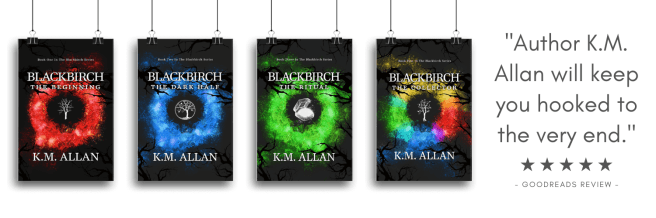
Later this month also marks one year since I completed my debut series, Blackbirch. When I started writing an upcoming blog post to mark that occasion, my habit of rambling off-topic led to lessons learned in the authoring game—so here they are!

Author Lessons

Every writer’s journey is different, but we’re all striving for the same goal, and that’s to put our art into the world, hope it finds an audience, and go with the lowest of lows and the highest of highs.

Because of those shared goals, I’m going to share parts of my journey regarding the lessons I’ve learned as an author.

When I started taking writing seriously, there was a lot I didn’t know. There’s still a lot I don’t, but there are some things I do thanks to years of consistently running social media accounts, blogging, and releasing books.

I wish I could say I was a runaway success at any of these, but I’m just like most people—putting myself out there and hoping it works.

The Writing Community

The first lesson I’d advise, and what I did, was join the writing community.

Even though writing is a solitary effort, I would not be where I am today without the friendships made and the support I’ve received.

My intro to the writing community was kick-started by starting social media accounts, this blog, and interacting with fellow writers. I’ve had friendships develop from beta reading and swapping manuscripts with writers in other countries, some of whom I count as good friends today. I would not have made those connections without putting my little introverted self out there, and you can do the same.

What I’ve also found in the writing community are fellow writers who will encourage each other, write with each other regularly for years, meet up in real life, go on writing retreats together, beta read for each other, and support each other’s books. As a part of the community, I’ve also read some of the best books, and found new favorite authors with backlists I’ve devoured.

While a reason to join the writing community is to get your name and work out there, it’s also about making connections. Find friends, not just potential customers/readers. They will help you more than paid assessment services, will lift you up when you get bad reviews, rejections, and disappointments, and encourage you when you feel like giving up.

They’ll support your books and you, and if they’re writing too, they’ll understand. They know what it’s like to put your heart and soul on the page and not have it come out how you want it to.

Lesson learned: the writing community gets the ups and downs because they are in the trenches too. It might take you a while to find others you mesh with, and writers will come and go from groups just as friends do in your life, but it’s all worthwhile.

Social Media

Years ago, I used to worry about taking time off from posting on social media, because if you took time off, you’d come back to no engagement and fewer followers.

Now, there’s so little engagement across all platforms that most people don’t even notice when you’ve taken a break.

You can do absolutely everything in your power on social media and follow every tip posted by those who have been successful, and in the majority of cases, nothing changes.

Don’t burn yourself out over it. Do what you’re happy to do. If you like making and posting graphics, do that. If reels are the only thing you can create at the end of a long day, post reels. If you can swing posting Monday to Friday, but take weekends off, take the weekend off!

I spent years posting 6 days a week, trying to find the exact right time, and the right posts, and you know what happened? My social media numbers grew quickly and then stopped.

On Instagram, I quickly gained over 2,300 followers—and that’s it. For the last 9 years, my follower count has stayed the same. Doesn’t seem to matter what I post, who I follow, or what I do, I can’t grow the numbers. Occasionally I’ll go up by 5, but that number then dwindles back down.

My Facebook author page has limped up to 600-odd followers. Twitter for a brief time was the best and got to around 3,000, but then Twitter went to crap, the majority of the writing community left, and I barely check it anymore.

My blog/website has had the best growth and follower count. Almost 5,000 of you amazing readers follow my posts, but like everything in 2024, the algorithm has strangled reach and engagement is now down here too.

Do you know how I get any new followers now? From real life. The few times a year I go to a book event, everyone just looks each other up on Instagram and then we follow each other to keep in touch. I’ve gained more followers doing that at two recent book launches than I have for the last two years.

Lesson learned: You can’t control social media, you can do everything “right” and still not get anywhere, which you’ll of course blame yourself for even though it’s out of your control. So…

  • Post what you enjoy and what you’re comfortable with.
  • Post when it suits your lifestyle, not rumored rules that no one can verify.
  • Accept that you can’t control it all.
  • Engage when you can.
  • Don’t expect others to reciprocate with likes, comments, and shares. Most don’t, and most of the time it’s because they honestly don’t see your posts, even if they’ve been following you for years.
  • You’ll find people who will interact with you regularly—do the same for them.
  • If you’ve reached a point where checking social media gives you anxiety, take a break. The world won’t end.

It will feel pointless most days, and as much as I’ve moaned about social media, I wouldn’t have sold the books I have without it. The best way is to run your social media accounts, don’t let them run you.

Newsletters

From July 2019 until October 2020, I ran a newsletter. It was a free version with Mailchimp, so it didn’t cost me anything but time to put it together and send it out, and I enjoyed doing it when I first started.

Like my social media accounts, the newsletter got stuck at 210 subscribers, and then most subscribers stopped opening the emails.

In the end, putting together the newsletter content was taking time away from writing and editing, so I closed it down and now publish the content on my blog as my roundups. My current version of a newsletter is now encouraging readers to subscribe via email to my blogs (which you can do here).

Having a newsletter gives you direct contact with readers who are interested in your work, and isn’t reliant on an algorithm showing your content to others, so there will always be an incentive to start one.

If, like I did, you find the effort is costing you in other areas, no rule says once you start a newsletter you must keep it going for the rest of your life.

Lesson learned: always reevaluate what works for you, and don’t push yourself to do something you hate because social media (or blog posts like this) say you should have a newsletter. If a newsletter works for you, start one. If it doesn’t, don’t.

Support

You’ll never get more support than with the first of things.

First time in the query trenches. First full MS request. First rejection. First published book. You should celebrate all these things, and you’ll find most people will celebrate with you, and support your posts with shares, comments, wishes of luck, cover reveals, and release day announcements.

First books will be bought by friends, family, and followers who’ve been watching your writing journey progress and want to see what your work is like.

The longer you’re around, the more work you release, the different ways that support fluctuates. In a perfect world, every release of anything new will build and become more. In reality (for the majority) support drops off. Not because you’re getting worse, but because that’s life.

Lesson learned: support who you want, and don’t expect the same level of support back, or support to last forever. Always (and I am) be grateful for any support given, especially from those who show up year after year, release after release. They’re worth more than subscriber numbers or sale figures.

As this turned into a bigger-than-expected post, I’ve split it up for easier reading.

Part two can be found here and covers indie publishing with IngramSpark, thoughts on Amazon, burnout and self-doubtgrieving the end of a project, author extras, and what you can and can’t control.

In the meantime, if you have any questions about the topics in this blog post, drop them in the comments.

— K.M. Allan

Find me on InstagramFacebookGoodreads, and Threads. You can also sign up for my Newsletter to get my blog posts delivered directly to your inbox!

image belongs to K.M Allan

A Brief Discussion of Publishing Options

What are the choices available to writers today?

There was once a time when the only way to get your book published and in front of readers, was to get an agent followed by a publishing contract. This option still exists, of course, and is now usually referred to as ‘traditional publishing’. It’s traditional in the sense that the same rules have applied for a long, long time. These days the traditional model is not the only option for aspiring authors and in this blog post we will briefly examine the other options available.

Image by Mirko Stödter from Pixabay

But first – a very brief history of the rise of self-publishing!

  • 1993 the worldwide web becomes accessible to all, opening the doors to self-publishing
  • 1997 Lightning Source, POD company is founded, opening the market up to small presses and indie pubs and inspiring companies such as Ingram Spark and Lulu.
  • In 1999, blog hosting takes off. Writers use blogs to share their work.
  • In 2000 Stephen King was the first major author to self-publish a book (The Plant) online in electric instalments.
  • In 2007 Amazon launches Kindle Direct Publishing, allowing authors to self-publish their books to be read on the Kindle e-reader.
  • 2008/09 crowdfunding platforms like IndieGoGo and Kickstarter make it easier for artists and writers to raise money for projects.
  • 2011 increasing numbers of people own e-readers and companies like BookBaby and Smashwords allow writers to publish and distribute ebooks worldwide.

And since then, things have continued to change and evolve! In fact, it’s pretty hard to keep up and anyone thinking of discussing the subject or offering a workshop or course, would certainly need to do their research again to ensure their information is up to date.

We’ve mentioned self-publishing so let’s examine that first.

Self-publishing

Many people assume self-publishing simply means uploading a manuscript and book cover to Amazon and pressing ‘publish’. In reality, it’s far more complicated and complex than that, and even self-publishing has more than one option available to you.

  • Go it alone with Amazon Select
  • Go with Amazon and other distributors. (Draft 2 Digital is a major one)
  • Go with a  publishing platform such as IngramSpark, BookBaby or Smashwords
  • Pay for a publishing company to edit, format and market your book
  • join up with other indie authors and form a publishing collective, such as Chasing Driftwood Books

All of these options have benefits and drawbacks to them and if self-publishing is the route for you, it’s a good idea to research the various options available before you start. Your final choice might be what suits you and your book or it might be decided by finances as the options have different price tags. The most important thing to consider is the professionalism of your book. In order to compete with traditional books, a self-published book needs to look and read just as good, if not better!

Indie Small Press

This option is becoming more popular and is an attractive one to most aspiring authors. Independent presses or small publishers are just that – independent and small. They are more likely to take on unique and original manuscripts and more likely to take a risk on you and your book. Often they are themed, as in some cater purely to crime writers, some to romance and so on. But there are plenty out there who publish books in multiple genres. Usually, you do not need an agent to submit your book to these publishers. There are drawbacks though: they will often require you to have a social media following or author platform on the go and they will certainly ask you to do as much of the ‘marketing’ of your book as possible. They just don’t have the same funds as the big trad publishers. You’re also unlikely to receive an advance.

Traditional Publisher

The model of publishing most people are familiar with. You polish up your manuscript and send it to a multitude of suitable agents. If you are lucky enough to be signed with an agent, it is then the agents job to sell your book to a publisher. If successful, you might receive an advance, but possibly not one as generous as in days gone by. The publisher will do the bulk of the marketing and selling of your book. This is often the preferred or ‘dream’ route for many authors, but it’s important to remember that the big publishers and agents often know what they are looking for and they are looking for what they already know will sell. You might also be waiting many, many years to see your book in print.

Creating an Indie Collective

This is a more unusual way to get published but it seems to be growing in popularity. In essence, this is self-publishing, but with a slight difference. You can set up your own publishing name, perhaps with similar authors and create a logo and a website. Although your books are still self-published, they have a ‘brand name’ attached to them and possibly a logo. If you are in a collaborative group with other authors you can all help advertise and market the books and this will lead to increased sales. You could have a group newsletter to sign up to, have group giveaways, competitions and appearances and so on. It’s very much a DIY approach and can be a lot of fun for creative people. Chasing Driftwood Books is a small indie collective with this ethos very much in mind: we can do more if we help each other!

So, there you have it. These days, if one door closes on your manuscript, you can be sure that there are still plenty of other doors to try. That doesn’t mean it will be easy – but that is a topic to explore another time!