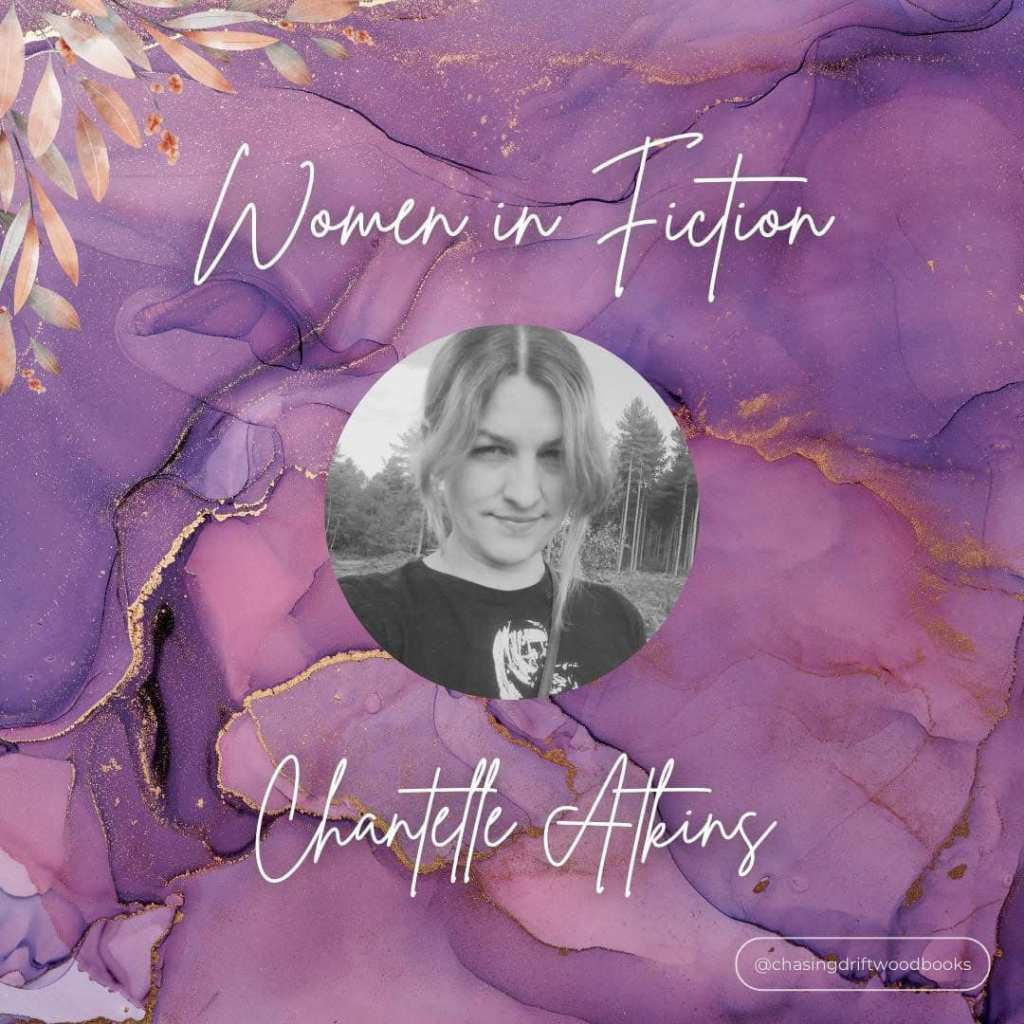
Chantelle Atkins was born and raised in Dorset, England and still resides there now with her husband, four children, and multiple pets. She is addicted to reading, writing, and music and writes for both the young adult and adult genres.
Her fiction is described as gritty, edgy and compelling. Her debut Young Adult novel The Mess Of Me deals with eating disorders, self-harm, fractured families and first love. The novel received a wave of glowing reviews, one reader had this to say: At over 400 pages, The Mess Of Me is not short but the gritty, vibrant and engaging style will soon have you turning the pages. What I found so impressive was that it ticked all the boxes: the attention to detail is spot-on, the characters are vivid and real, the dialogue edgy and witty and the pace and plotting executed skilfully making it a real page-turner. – Kate Rigby, Author
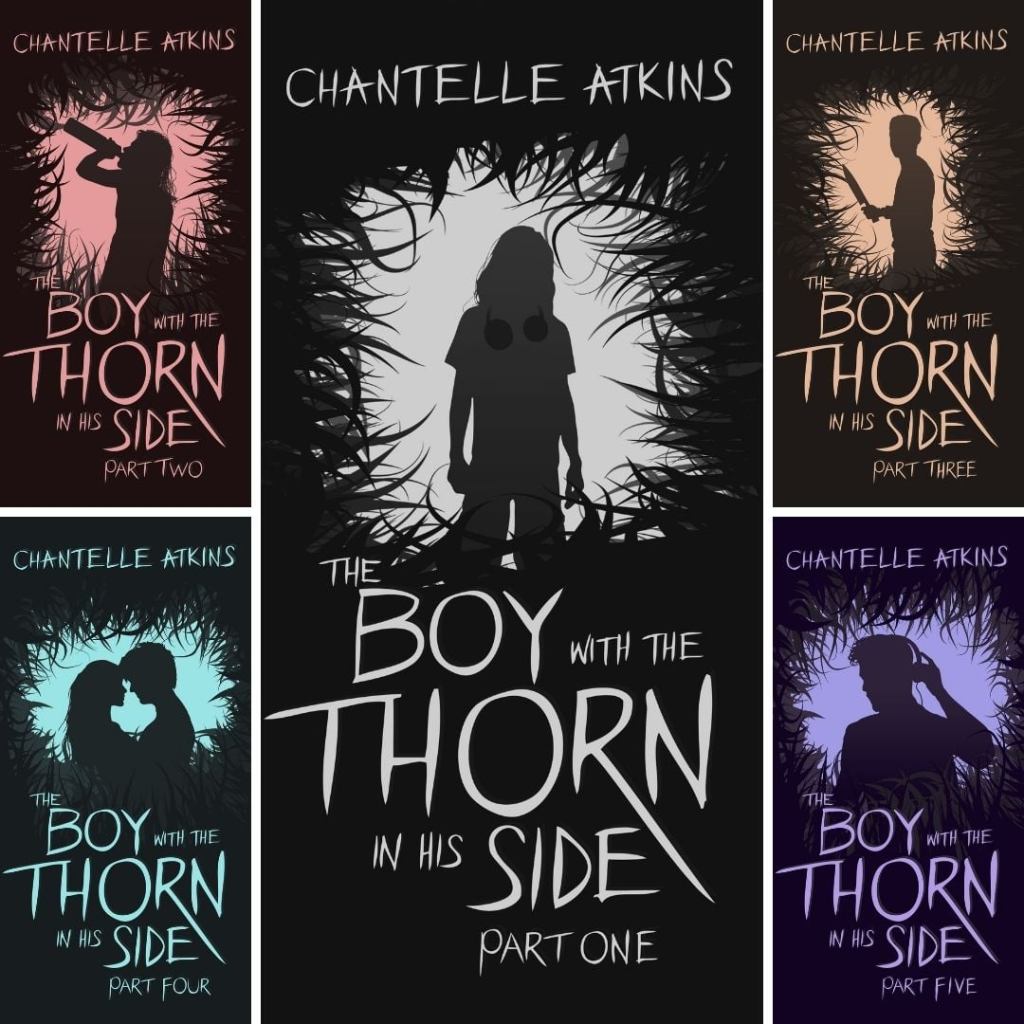
Her second novel, The Boy With The Thorn In His Side follows the musical journey of a young boy attempting to escape his brutal home life and has now been developed into a 5 book series. She is also the author of This Is Nowhere and award-winning dystopian, The Tree Of Rebels, which readers praise for its suspenseful storyline and engaging characters. Another award-winning novel, Elliot Pie’s Guide To Human Nature, was released in October 2018.
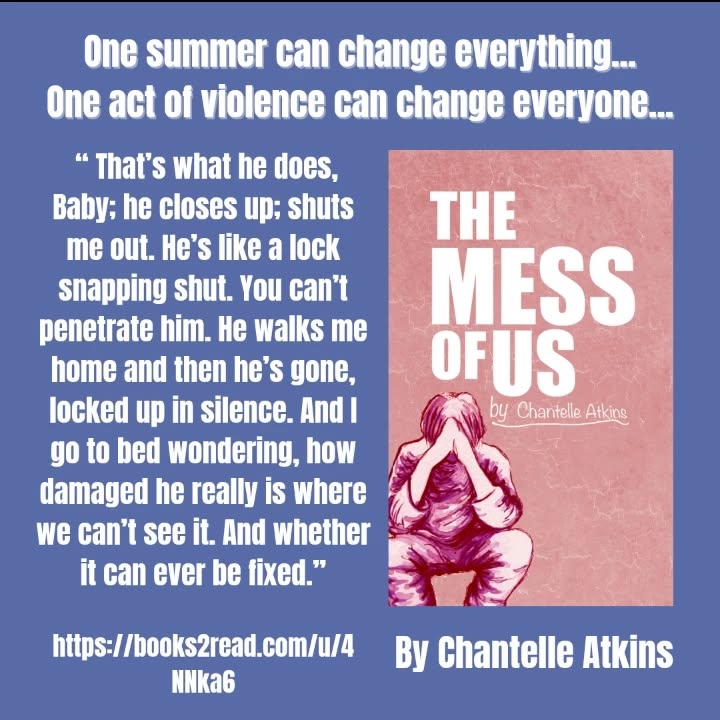
A Song For Bill Robinson was the first in YA trilogy titled Holds End, followed by Emily’s Baby and The Search For Summer. Recently, she has co-authored the Fortune’s Well YA trilogy with Sim Alec Sansford. The Day The Earth Turned books 1-4 are her latest series release. Followed by the amazing The Boy series spin off, At Night We Played in the Road. And her follow up to her first novel, The Mess of Us, which has received multiple glowing reviews.
You can find all of Chantelle’s books, poetry and short story collections by clicking here!
You can also stay up to date with all her latest articles, blogs, and news by subscribing to her Substack here.
If you’ve stumbled onto this post without reading part one, Author Lessons: Writing Community, Social Media, Newsletters, and Support, you can find it here. Part two covers the rest of the lessons I’ve learned in the last nine years. They are based on my own experiences and may be different from yours. I’m just sharing what I know in case it’s of help to any other writers traveling the same path.
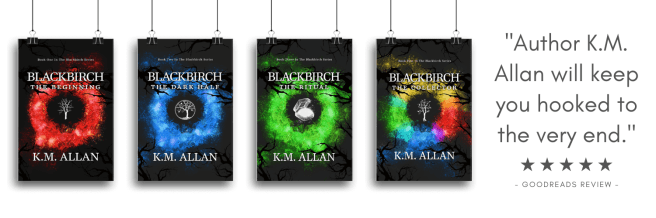
image belongs to K.M. Allan
Author Lessons
Indie Publishing
Like most writers, I took my shot at traditional publication. I queried for several years, got rejections, 2 full requests, and even signed a small press contract.
In the end, all books published under my name so far have been indie published by me. There are many ways to do this, and a quick Google search will no doubt give you step-by-step blogs by more seasoned professionals.
As this post is about my author lessons, this is whatmy experiences in indie publishing have taught me.
Four years ago, I went with IngramSpark. Nowadays, good practice is using Ingram or Draft2Digital to go wide (all retailers but Amazon), while also publishing directly with Amazon.
I’ve recently heard rumblings you can now also go direct with Apple, and Barnes and Noble, etc, but I suspect that’s a US thing.
When I was researching publishers to go with, I did look at Draft2Digital, but they don’t have a printing facility where I live, and Ingram does. This means it only takes mere days to get physical copies of my books. I also found that the print quality of paperbacks is better with Ingram than Amazon, which is another reason I chose them.
Ingram used to charge to publish books. Now they don’t, but if you need to make changes, such as fixing typos or updating your book content, it will cost you. I have heard Amazon allows you to update your files without incurring a cost, but again, I currently have no personal experience with the inner workings of publishing through Amazon.
Another tick in the going with one publisher box was not wanting to check separate places for sales. Ingram has one dashboard, and it’s easy to run reports from.
Can you now guess where I sell most of my books? Yep, it’s Amazon. A place where I’d get higher royalties if I was going directly with them (and that’s on me). I also have one reader who has so far bought every ebook I’ve released on Kobo, and occasionally I’ll get an Apple Books ebook sale.
As an indie publisher, you’ll set the recommended retail price, but Amazon and others don’t have to stick to it, and they usually won’t.
Sometimes you’ll see your books on sale and be able to tell people who will hopefully take advantage. Other times, you’ll see it so ridiculously priced that even you wouldn’t buy it. No one else does either, and months will go by with no sales.
As for advertising your books and marketing, this is the hardest part of publishing and is a constant uphill battle. I’ve heard mixed things about doing paid ads, particularly Facebook ads, and it’s not something I’ve waded into (yet).
My first book release was at the start of the pandemic when everyone was reading and I reaped the benefits. I’ve also released two books at the end of the pandemic when no one was reading or spending money and suffered the consequences—just like every other author.
I’m in two minds about Amazon. They seem to punish writers who aren’t using them. More than one release day has been marred by people not being able to order my books because Amazon listed them as “Unavailable”—all because they’re coming from Ingram and not them.
I can tell you from firsthand experience that if readers can’t buy your book when they want to, or they see a message that it’s not in stock and there is no date for when it will be in stock, you’ve lost a sale.
I’ve also read recent horror stories on Threads of Amazon suspending writer accounts and canceling pre-orders, which are sales most indie authors won’t get back.
I’m also sure I’ve had some sales they have never been reported to Ingram. That’s not to say Ingram is fantastic either. If you contact either company about lost sales, incorrect listings, missing covers, or outrageous prices well above the RRP, they blame the other companies and say everything is out of their control, leaving you with very little control.
I’d love to sell my books directly from my website, but the cost of postage makes it impossible, even within my own country.
Lesson learned: no publishing place is perfect, and all will frustrate you. Weigh the pros and cons for yourself and go with the company that’ll work best for you. Maybe one day there will be better solutions, but for now, we can only work with what we’ve got access to.
Burnout
Posting on social media consistently, writing manuscript after manuscript, being in the query trenches or on submission, and just being in an endless loop of waiting to hear what others thought of your MS/pitch/query/submission pages, and checking if your last post got enough views/likes/comments or was swallowed in the social media void yet again, takes its toll.
Doing all of that, being in that constant state of waiting, plus the internal drive to get better in an industry where you’re only as good as the last piece of content posted or book published quickly leads to disillusionment, burnout, and self-doubt.
Lesson learned: remember that you got into this because you love to write, that you keep trying because you love to write and you want others to read what you wrote, to connect with it like you do. If you find everything else is robbing you of that love of writing, take a break. Reassess things and always go back to writing.
Author Extras
The trend at the moment for author extras seems to be character artwork (made by fellow artists, not AI) and if that is something you can afford and want to include, go for it.
I haven’t commissioned such work, so I can’t speak on it, but I can say the author extras I’ve spent money on have been bookmarks, enamel pins, a tarot card based on one featured in my series, tote bags, mugs, and chocolate bar wrappers (this post contains some pics if you’re curious). These were done as giveaways to beta readers, book launch comps, and book launch swag.
I’ve also invested in business cards, which I took to my first writing conference in 2017. They were left on a table, along with everyone else’s cards. I still have a box of them sitting in my desk drawer. There haven’t been too many other places to hand such things out as COVID killed off a lot of in-person conferences.
If you go to such events often, it is a good idea to have either a business card, bookmarks, or other swag you can hand out. I suggest using a QR code on them so you can keep the info updated. My business cards have an old domain on them (which still works) but it makes me hesitant to hand them out as I know it’s not the latest and easiest info.
Lesson learned: if you can afford to get some author swag, do it. If you can’t, don’t. As much as social media would like you to believe that a release that doesn’t include sprayed edges, limited edition hardcover copies, or a candle that can be included in a giveaway box means your book will fail is all wrong. Make the best book you can. That’s the priority.
If you want extras and can swing them, go ahead. They may garner attention, but if the book is bad, a sticker of the cover art will not improve its standing amongst readers.
Control
One big lesson I’ve learned is that you have control over what you initially write. And that’s it.
The book those first few drafts will become is something you have less control over as feedback from editors and beta readers will change the book’s shape. Then, when it’s released, you’ll never have control over how it’s received, how and when it’ll be reviewed, how much it’ll sell, if your promo posts work, or if it’ll be picked by readers, let alone a bookstagrammer that will make it go viral.
Lesson learned: all you can control is the words, the next book you’ll work on, and your reaction to everything. Focus on those things, and learn to let go of everything else.
Writing Project Grief
One surprising thing I’ve gone through when finishing a writing project is a grieving process. Wrapping up a book series that was a part of my daily thoughts and life for a good chunk of time (twenty-two years) hit harder than I expected.
Often, a work in progress that spans years becomes part of your life as you write it while trying to figure out who you are. When you finish that project, that part of you is now also gone. So are the hopes you once felt for this idea that bloomed into something so big.
Some books achieve what you want—getting written. Others almost hit that ultimate writing dream. You may have landed goals you never dreamed of, such as signing with an agent, a publisher requesting a full, getting all the way to an acquisitions meeting, and signing a contract. Or you could have watched all those things happen to others as the years and luck passed you by.
Sometimes, even when books achieve more than you dreamed, they still don’t hit the specific expectation you wanted, so you grieve that too.
That writing project isn’t the breakthrough you’d wished for, but now a backlist book you hope will eventually be discovered by others.
Lesson learned: your next book may not live up to your wildest dreams, or it may surpass them. Write the books of your heart, adjust your expectations to reality, but always keep a little sparkle of big-wish hope. It’ll keep you going.
And those are my author lessons. I hope you’ve gotten something from these two posts, and if you have questions about what’s been written, or want to ask more, let me know in the comments.
I have always had a vivid imagination and when I was a child I lived in the fantasy worlds I created. I was ill a great deal from babyhood so I spent a lot of time alone in bed and all my friends were characters I met in books or in the stories I invented myself. So I never made a conscious decision to be a writer – I have been making up stories ever since I can remember and writing them down from the moment I learned to write.
I think I write fiction as an adult to meet the same needs I had then. I was a lonely and often an unhappy child so this was partly a need to escape from reality but also I think both then and now it meets a need to address the problems life poses by approaching them from a more creative angle. Writing is a way of taking control of reality because you can shape it and reshape it through words, expressing your own experience and vision of the world and, through doing that, you can transform reality into something greater.
Writing a novel can be very daunting: it seems such a huge, long-term commitment and it is lonely work. You can’t really workshop a novel so it’s difficult to get feedback while you’re writing it, and although you can publish extracts in magazines, this is never satisfactory as it involves taking fragments of the whole work out of context. Thus any feedback you might receive as you go along is often based on misunderstanding.
This means a novelist needs perseverance and patience in the face of isolation as a writer. It helps to take one step at a time – I find novel writing is like doing a large, complicated jigsaw puzzle. I know what I’m aiming for but I don’t tackle the whole picture at once, just a small area at a time as I might concentrate on the sky when doing a jigsaw; I recognize and build up connections gradually. Once I am about halfway through, it becomes much easier, sections begin to fit together and I see the whole work taking shape. I find the important thing is to keep writing; I don’t let myself get stuck over Chapter 2 if I could easily write Chapter 6, I know Chapter 2 will become clearer later. A novel is a long piece of work – if you don’t keep writing, it will never come into existence at all so you do need to be disciplined about it.
In the years when I was studying and working it was often hard to find the time to write regularly. Now I have more time, I would ideally like to write for at least an hour or two every day but I am disabled with a progressive degenerative illness that affects my spine, so these days my major problem is living in severe chronic pain and also suffering from stiffness and weakness in my hands and wrists which make the physical act of writing difficult. I use voice recognition on my computer to overcome these problems, and I have a wonderful dictaphone which I can carry around with me and use for making notes and capturing ideas. I can download my notes to the computer from my dictaphone, although this involves a lot of correction and editing so it isn’t always useful. My voice recognition software (Dragon Naturally Speaking) is very helpful because I’ve been using it for over 20 years so it has become trained to my voice and my vocabulary. In the beginning I found it quite a challenge. Sometimes it would write things totally different to anything I had dictated! This could be quite surreal.
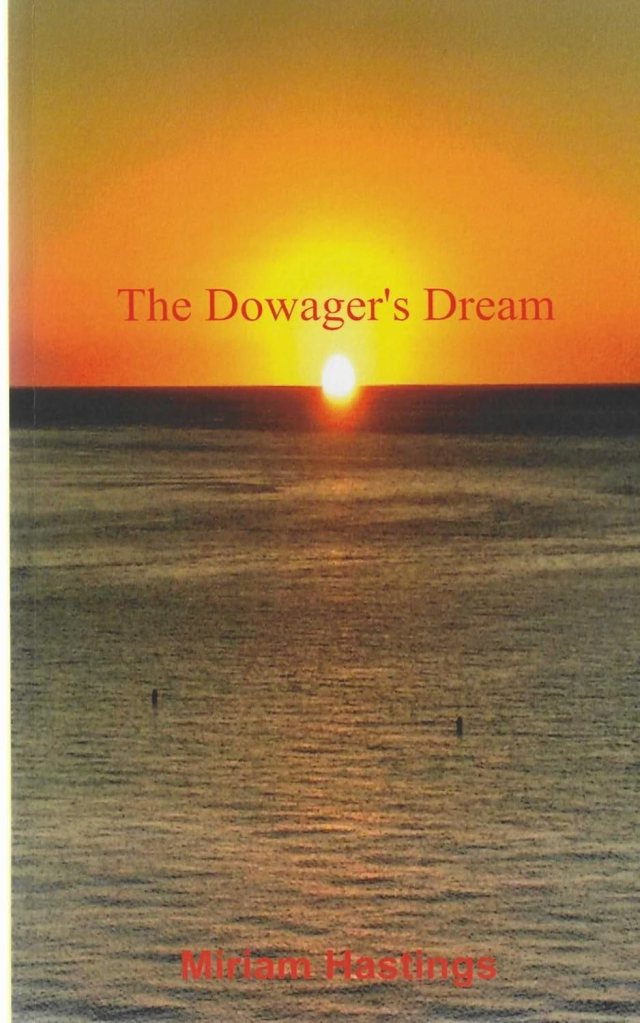
When writing a novel, I find it helps to keep some distance between myself and my central characters so that they are presented vividly but they don’t take over the story: using the third person narrative voice can be helpful in this respect; also, the device of having more than one narrator. In my latest novel, The Dowager’s Dream, there are two central narrators who each see the main events of the story from a different perspective. This novel feels very personal to me – possibly the most personal of all my novels – although it’s set in the north of Scotland during the early years of the 19th century, at the time of the Highland Clearances. The story was partly inspired by the lives of my great, great-grandmothers, Margaret MacKenzie and Christine Patterson, also by an extraordinary account written in 1809 by the Minister’s daughter of Reay, describing a mermaid she saw in Sandside Bay, Caithness – but the mermaid in The Dowager’s Dream is not pretty, being a dark symbol of both sexual and cultural repression. For several years I was researching the Highland clearances and themes of dispossession and ethnic cleansing are central to the novel.
However, although it seems that I’m creating an entirely imaginary world, I find that life has a habit of creeping up on me unawares. I often think that writing fiction is very similar to the process of dreaming: often when we analyse our dreams, they echo aspects of our own lives and we find facets of ourselves shown us from a new perspective. Like my dreams, I find that my fiction, however remote it may seem from my own experiences in terms of historical period or life events, can always show me something about myself from the patterns that have emerged from my unconscious mind. These are rarely obvious and it is unlikely that another person would notice them, but they gradually appear like a developing photograph, or like clouds taking recognizable shapes; faces, mountains, islands surrounded by water, mirroring the terrestrial world in a strangely transformed manner. When I look at the fiction I have written in the past, I find certain patterns being played out over and over again; patterns of relationships, patterns of survival, which frequently have resonances in my own life. An obvious example is a relationship between two girls or women that reoccurs again and again in my novels and often mirrors my complex and sometimes difficult relationships with my sisters. In The Dowager’s Dream, the relationship between the two narrators, Mary and Kirsty, is especially challenging since Kirsty is Mary’s servant as well as her friend.
Here is an extract from The Dowager’s Dream, pp316-318:
‘Kirsty stared at me, “You . . . you knew too?” she turned as white as her own kerchief, “You knew as well as he did? Why did you no tell me? Why did you no do something?”
My cheeks burned. I could understand why she felt we had betrayed her, and all the people besides. If I had said as much and begged her pardon there and then, maybe our lives would not have unravelled as they did.
“There was nothing she could do, lass,” said Father, and rather to my surprise his voice was gentle.
“You could have told me,” Kirsty said, still addressing me, “you could have told me; I would have done something.”
“There was nothing you could do, Kirsty,” I protested, “your Uncle George and Aunt Lucy could do nothing, you know that.”
“I would have done something,” she repeated, “I would have had the will, even if you did nae.”
“That isn’t fair,” I cried, “of course I had the will, but what could I do? What could you have done?”
“I would have warned my friends and neighbours, we might have been heard if we’d all spoken out together, before the notices to flit had been made up. We could have fought for our land. I would fight, indeed I would!”
“You should be keeping quiet and doing your duty to those above you, nae making trouble like those murdering savages did in France!” said Father, sounding angry now.
“My da and mam are to be homeless, they are to be robbed of their land – land my family have tended and worked on for time out of mind – and I am to say nowt! Do you think this is a right, Miss Mary, do you think there is any justice in this? Would you say nowt?”
Patient Griselda, distressed by Kirsty’s excited voice, had come to her side and now she got up on her backlegs to pat Kirsty’s hand as was her wont. Kirsty scooped her up and pushed her into my arms, “I am no Patient Griselda,” she shouted, “nor will I ever be. I am no hypocrite – and I am no Judas that can be bought with bribes and promises to betray my Christian duty!”
Father gasped and floundered for a moment, too shocked by her words to speak, then he found his voice. He was red in the face, though whether from shame or fury I cannot say for sure, but he did not look her in the eye even as he raged at her, “Listen to yourself, you wretched girl! You dare to talk of Christian duty when you openly flout those God has put in authority over you? You dare to accuse me – your master and your Minister of religion – as if you had either the wisdom or the understanding to know what is right and what is just!”
“Well, Minister, you will be glad to know you are no longer my master or my priest. I will no stay here to serve you and I’ll never enter your Kirk again, I scorn you and your fine words I’m going to my mam and da, I will help them if you will nae!”
“Of course we want to help them,” I began, but she had already turned from us and left the room. I could hear her climbing the stairs.
I moved to go after her but Father shouted, “Let her go!”
Poor Griselda trembled in my arms and I soothed her as best I could with tears running down my face. It was not justice – Kirsty was right, there was no justice in it.
“Let her go,” Father repeated dully, “let her go for now, she’ll be back soon enough.”
He retired to his study – to his opium, no doubt, taking a new flask of whisky with him. I dreaded the result but had no time to fret for I knew I must stop Kirsty before it was too late. I ran upstairs to her attic chamber and found her packing her box. She even threw in her Bible and seeing it, I trembled; if she was taking that, I knew she was serious.
“Please don’t leave me,” I said, my heart hammering at the very thought of being without her.
“You should have told me,” her voice was cold and hard, “how could you do this? How could you no tell me?”
“Kirsty,” I protested, “it would only have upset you, you might have done something stupid, you might have got hurt.”
“Hurt!” she shouted, throwing her bundle over her shoulders and lifting her box, she headed passed me down the stairs, with me following, pleading.
I grabbed her box from her, “I will hide this,” I cried, “I won’t let you take it!” Struggling a little with the weight, I carried it to my own chamber and locked it in my closet.
But Kirsty passed by my door with her bundle in her hands, “It is no good, Miss Mary, I will send Peter for my box,” she said, as coldly as if she cared for me not at all.
“Please,” I begged, “it was not I who preached today, it’s not fair to blame me so.”
Kirsty stared at me as if she thought me foolish beyond belief, there was something akin to pity in her eyes, as well as contempt’
Today we are joined all the way from Australia by Young Adult author, K.M. Allan.
1. First of all, for anyone that doesn’t know about you please can you provide a short introduction. Where are you from, what do you write, and how long have you been writing? (As well as any other info you feel relevant)
My name is Kate. I’m originally from Sydney, Australia and currently live in Melbourne, the city of a million seasons in one day. I write YA books, and I also write about writing on my blog, sharing as many tips and tricks as I can with other writers. I’ve been blogging for 7 years, writing books for over 20, and have been published for the last 4 years.
2. First things first, what got you into writing? Is it something that’s always been there or something you came to later? Tell us everything!
I was a reader first, always borrowing books from the school library, reading them in class, and then returning them for more at the end of the day. I don’t remember wanting to be anything other than a writer, so I guess it has always been there. After being such a big reader, making the jump to writing the books seemed like the natural thing to do.
3. You’re very involved in the writing community, why is it so important to you? How does it help your process?
I can safely say my books would not be out in the world without the writing community. The support and help of friends I’ve met in the community has been there while writing multiple drafts, dealing with endless edits, and going through the ups and downs of querying, rejections, missed opportunities, and book releases.
It’s so important because the writing community understand exactly what you’re going through during those processes because they’re going through them too. That kind of camaraderie really does keep you going, and it’s also great to be able to help others with beta reading or providing motivation when they need it too.
4. You’re very fortunate to have a wonderfully creative person in your life that’s helped you create stunning covers for your books. What can you tell us about this? Do you collaborate on ideas? How much does this help in terms of marketing etc.
This is my husband, who trained as a digital designer. That has come in very handy for creating awesome book covers. I have all the ideas, but not the skill level to pull it off. Fortunately, he does. He’s also pretty good at adding extras and knowing what colours will make things pop.
Marketing wise, I do have the skill levels to create graphics, so I usually do that myself. Of course, having eye-catching book covers to base that marketing on certainly helps.
5. Your series, Blackbirch, is one of the best paranormal YAs we’ve come across. What can you tell us about this series? What can readers expect?
Thank you, that’s so nice hear. This series is something I worked on for a long time, and I have so many alternative drafts of what the series was a one point. The published version is about a 17-year-old named Josh Taylor. He was born in a small town called Blackbirch but moved away as a kid. The truth as to why is something that’s revealed across the 4 books, as is the real history of the town, which uses a played-up version of it’s strange woods to keep itself afloat. Like most people, Josh dismissed real magick as a lie, but when strange things start to happen to him when he returns to Blackbirch, it’s not something he can ignore.
Readers can expect lots of twists. I do love to throw them in there. I also love a bit of humour to balance out the darker storylines. There are also frenemies, found family, first loves, magick, elemental spells, and a dark force hidden deep in the woods.
6. Josh and his friends are so loveable and believable, and the town of Blackbirch itself is so vivid on the page. How long did it take you to write this series, and what sparked the initial idea?
The initial idea was sparked one day when I was walking home from work. The thought of a girl saving a boy using magick popped into my head and stayed there for years. I wrote down ideas and half drafts for a long time before finally deciding to take it seriously in 2015. From there, it took me five years to get the first book out. By the time the last book was published in 2023, it was 22 years from the initial idea to full publication. I don’t recommend taking that long, and I certainly hope I won’t take that long with my next book.
7. What is it about paranormal fiction you find so intriguing? Would you consider other genres?
Strangely, that is the only story idea I’ve had that involved magick. My other ideas, and next book, will be more in the thriller genre and based on mystery and murders. Blackbirch just came to me as a story about witches and I went with it.
8. You have two very special four legged companions that champion your writing. Tell us all about them! The public need to know!
Anyone who looks at my Instagram feed or my blog header will know about my writing companions, Dash and Luna. They’re ragdoll cats who love to steal my chair and put fur all over my keyboard. Luna is also fond of photo-bombing any bookstagram photo I’m trying to take of my latest read. There’s no writing session without those two as they love to sit in the office with me, whether I want them there or not!
9. How did you first fall in love with writing? And how do you manage to write so fast? What keeps you so motivated!?
Some might say taking 22 years to get a series written and published isn’t fast, but once I did take it seriously, it did happen relatively quickly. I put that down to being consistent. I started writing just an hour a day, and I did that every day until it was a habit. Then, as the story started to take shape, the motivation to work on it more and more just naturally happened.
Now it’s knowing that I can write a whole book that keeps me motivated.
10. Finally, please tell us about your latest release! What is it called? Where can we find it? And what can we expect next from the world of Blackbirch and K.M Allan?
My latest release was the final book in the Blackbirch series, and it’s called The Collector. It wraps up all the storylines from the books before it and reveals long-hinted at secrets. It can be bought in paperback and ebook from all the usual online places (Amazon, Barnes and Nobel, Kobo, Apple Books, etc – all the links are here: https://kmallan.com/blackbirch).
There’s nothing left to expect from the world of Blackbirch now the series is done, but next from me is a non-fiction book of writing checklists that will help other writers write and edit their work, which I’m aiming to release early 2025.
Thanks so much to K.M Allan for joining us today and if you’d like to find out more about her writing please follow the links below:
Read on for an exclusive interview with Steven Smith!
As captain of the airship Arcos, Edison Crow and his childhood partner in crime, Selah, lead their crew in search of a big payday. When it comes to the pursuit of wealth, nothing is out of the question for this band of charming rogues. Smuggling. Theft. Embezzlement. It’s all part of a daring game.
But all is not smooth sailing when you’re a high profile thief with a target on your back. A job gone wrong will thrust Edison, Selah and those aboard the Arcos upon a journey straight to the heart of the shady United Republic of the High Commission in pursuit of the truth.
Troubled by his own personal demons, Edison must navigate dark skies if he hopes to gain answers. Will it be enough to help the infamous Captain Crow clear his and his crew’s names? Or will he end up Chasing Shadows?
1 – Your debut novel is described as an epic steampunk adventure – what drew you to this genre in particular for your first novel?
I actually started out writing a novel with my re-imagining of the story of Jack the Ripper. I’ve always loved Victoriana and that era. It always struck me as a time of great change, both socially and technologically. I did struggle with the weight of fact and trying to get all of that down as accurately as possible. It ultimately led me to give up.
But steampunk, now that was a different situation. It’s also something I’ve always loved – it allowed me to indulge my love of Victoriana with the creative ability to create a vibrant world filled with wonderous technological advances. Once I started writing it had me fully hooked.
2 – You’ve released a follow-up book. What else can we expect from these books? How long will the series be?
So book two, As the Crow Flies is very much a direct continuation of Chasing Shadows. It continues with the mystery that the first book introduced. Many of the central characters from the first book make an appearance in this second outing, along with some new faces.
A third book is in the works as we speak – A Murder of Crows. There’s a larger part for some of the new characters this time out. I don’t want to give too much away, but it relates back to events in As the Crow Flies.
I’ve also dabbled with short stories, with quite a few set in the same universe as these novels. I’m planning to collect them together into a further book. As for what comes beyond that? I don’t yet know but I can see ways that there can be further books and spin offs within the same world.
3 – What would you say are the pros and the cons of writing a series?
The pros are that I get to see a world grow and evolve. Characters and locations develop and expand. It’s a wonderful experience. It allows me to explore beyond the boundaries of a single story, but still within the same world. Small, inconsequential characters or events could become stories in their own right, and I love that.
As for the cons – it can be quite tough to see beyond it. I struggle sometimes to come up with ideas that aren’t tied to my series, despite my desire to explore new ideas and genres. It is certainly achievable, but just takes a lot more effort.
4. Are there any other genres you are drawn to and can we expect any writing in the future from different genres?
Such a fantastic follow on from the previous question. Horror has always been a favourite genre of books and films for me. From Stephen King to the classics like Lovecraft and Poe, there is something about the world of horror that always draws me in. I’ve dabbled in it for short stories, but would love to write something more substantial in time and given the right ideas.
I also love crime. I’m working on a crime novel with the killings tied to The Twelve Days of Christmas. It’s still in the very early stages but it’s something different, and something fun for me.
In addition to these, I’ve been a fan of fantasy too, so I’d certainly consider playing in that space, though I’d love the time and headspace to really build this out properly.
5. Who is your favourite character from your books and why?
I’m going to cheat on this question a little and name two – Edison Crow and Selah. I think to some extent both of them represent different parts of me. And I love the way the pair of them as characters complement each other. On their own both are strong and independent, but together they can be quite formidable. But equally, the pair are flawed, and imperfect. But they accept that and learn to work with it.
6. What would you say are the best and the worst bits about being a indie author so far?
First up, the worst. All of the promo, marketing and sales is down to me. I’m not great at that, and I have a lot to learn, but being indie means I have no huge marketing machine or bottomless budget to do everything that’s needed to fully promote my book to the standard it deserves.
On the positive side, I get to do my thing my way. The books that stand the greatest chance of success are the books that have mass appeal. Pulp fiction for want of a better word. I would LOVE that level of success, but I also know what I want to write. And that is the sort of thing I want to read. I write what I want to read, and by not being beholden to contracts with an expectation of commercial success, I get to do just that. And with full and complete creative control.
7. Describe your process to us. Is it concept and genre first, or do the characters come first, for example? How do you get from idea in your head to finished book?
With Chasing Shadows, I heard snatches of a conversation in my mind, and only from one character. Then, with time, I saw the other side of the same conversation. And from there it grew. I saw what was going on around them, where they were and what they were doing. From there the ideas grew and I got them down on paper. I had no say or driving force over any of it, I was very much a passenger along for the ride.
With book two and three, things were rather different – I had the ideas and realised they weren’t going to fit into the book I was writing at the time, they needed space to breath.
I don’t edit until the end, otherwise I’ll never get anything written. Then I read through and make edits over many rounds. Then there’s text to speech, where I can have my stories read to me. Eventually, when I cannot do any more, it goes off to test readers. I take their advice on board, and run a number of rounds of edits after that. Then a final read with a test reader and one more chance for me to button down any lingering niggles.
Then it’s formatting and putting the files together. Usually somewhere down the road I will have already done my cover design when the inspiration hits.
8. Do you read much in the steampunk genre yourself and if so, what would you recommend?
I’ve actually read surprisingly little to date. One of my biggest supporters and good friends has been fellow author Richard Dee. He has been a massive support. He’s also a brilliant author. My experience of steampunk thus far has been through reading his Orphan Detective series. I also have his Horace Strongman series to read. I would highly recommend his work, and not just the steampunk books.
9. Who are your favourite authors? Who do you think has influenced you?
I’m going to get the controversial pick out of the way and somewhat spin this. I really enjoy the Harry Potter books. I want to make it clear I do not approve of or support the views of the author, but the books have held a special place for me, and I really connect with them.
Moving on – Stephen King. That man is prolific in the volume of books he writes, but also the characters he creates and the worlds he builds. His books are filled with descriptive writing that I know a great many readers struggle with. I find myself writing in a way not dissimilar and I don’t hate that. Plus, he is so much more than just the horror and supernatural stuff that he is most known for. I cannot speak more highly of The Dark Tower series. It’s a western sci-fi fusion that ties so many of his other works into a single universe, and they are just incredible.
Finally, it would be remiss of me to mention Terry Pratchett. I was a latecomer to The Discworld series. I believed them to be fantasy books for children. And I have never been happier to be proven wrong. Yes, they are fantasy. But they are filled with cynicism, with, humour and sarcasm that only those of us who are little further down the path will get. They are wonderful books, and I will always be sad that there won’t be another new book from him.
10. What are your long-term goals for your writing?
I could say to earn Stephen King levels of fame, celebrity and money. But that’s wholly unrealistic. What I enjoy most is writing stories I am proud of and would want to read. I want to keep doing that. And if along the way someone reads my books and genuinely likes them, well then that’s something I’ll never take for granted.
11. What are you working on right now?
There are three main projects on the go. A Murder of Crows is the third book in my series. At the moment, that one is the last in the series, but it may not stay that way if the ideas are there.
Then there is The Twelve Days of Christmas, my festive crime thriller. I am looking forward to seeing where that one goes.
The third is a collection of short stories that are set in the world of my steampunk novels. Some feature characters already seen in my books, and some that are completely unknown.
In addition, I do have a few more ideas for projects but they are not yet far enough along for me to discuss. What I will say is if they come off, they will be wildly different from a traditional novel.
12. How do you deal with typical writers problems such as writers block, imposter syndrome, procrastination and self-doubt?
I’ve suffered all of these at varying times – imposter syndrome and self-doubt more than the others. It’s tough, and can feel debilitating. With my first effort at writing, I tried to forcibly push through them. It was like walking through molasses – a hard slog with added pressure which is something I really didn’t need at that time.
Now, I’ve come to realise what I need to do. Step back and take a break. If things are inhibiting my ability to write with freedom and flow, then I need to step back. Take a break. Just stop writing. Rather than push on through, do other things to take my mind off of the writing until the blocks ease and I find my drive return. It’s happened many times throughout my time writing, and it’ll happen again, but I know what I need to do to get things back on track.
Thanks for dropping by, Steven!
If you would like to find out more about Steven’s books and keep up to date with his writing news, you can follow him here:




 Chasing Driftwood Books